

Fruit on a Barren Tree
How God Revives Our Languishing


This is a story about how families end and then begin again. It’s also a story about how we might imagine what it means to be religious.
I think I’d win a bet that most Sunday school teachers skip the genealogies in the Bible. The passages seem to be odd footnotes or appendices with little relevance. But they are all over the book of Genesis and pop up in two of the Gospels in the New Testament. There is even a version in the short book of Omni in the Book of Mormon, where the accelerated narrative of the passing of the plates through the descendants of Nephi’s family becomes a family history.
I think these genealogies are there for a reason. They point us away from understanding religion as a plan for systematic self-improvement and toward understanding it as an act of trust in the promises of the Bible and Book of Mormon that in the long run, God is remaking the world as a place of justice and mercy.
Often Latter-day Saints define “being religious” as following a set of instructions presumably given by God, with the promise that obeying these instructions will result in rewards for us, whether because God chooses to reward us for doing so or because the universe is designed such that obeying them will maximize our return. Phrases like “qualify for exaltation” or “access the atonement” appear in Church manuals and general conferences talks. These phrases bear with them the intuitive sense that religion is basically ethical, which means that it is simply a set of expectations for us to follow.
I think this way of understanding religion emerged in part from Christianity’s encounter with what we might boil down to the ideology of American self-help manuals. That’s a far older genre than we might initially assume, reaching all the way back to the relentlessly optimistic self-improvement in Benjamin Franklin’s Autobiography through Horatio Alger’s series of novels about poor, virtuous boys rewarded, up to the constant flood of late-twentieth-century guides promising to teach you how to get up earlier or maximize your schedule in half-hour increments or write better emails. All of these books take as their premise that your life could be idealized if you just worked harder. Sometimes they are cited in general conference.
On the other hand in the Bible and Book of Mormon human beings are presented in the ways that most of us feel, day to day: struggling, frustrated, well-intentioned but flawed, determined but acutely aware of our own frailties. Moses protests that he cannot possibly do what God asks of him. Nephi obsesses about his failures. Mary confesses she cannot possibly imagine how God’s promise to save humanity is possible.
But in both the Bible and the Book of Mormon what we might call “religion” is something that God instigates. In scripture, religion is something that God does rather than something human beings do. Instead, God reaches out. God seeks humanity. The main character of the Bible is not Adam or Moses or Paul; the main character is God. The main character of the Book of Mormon is not Nephi or Alma or Mormon; it is God. The main character in Christianity is not us; it is God. And the point for human beings is not that we need to work harder on personal self-improvement; it is that we need to understand the world of justice and mercy that God is creating around us.
Nothing reveals this more fully than the genealogies.
Genealogy as Literature
Modern readers expect scripture to move at the pace of individuals. We are accustomed to the so-called hero’s journey, and want to see individual people we can point to as examples. Thus, when we tell stories about the Book of Mormon, we emphasize that Nephi had faith, that Abinadi was brave, that Moroni endured to the end. And when we read the Bible we skip around to the stories about people doing hard things. We read the Creation, Adam and Eve, Abraham, Moses, Jonah, Daniel—and we flip past long descriptions of buildings in the books of Ezekiel and Kings, we ignore the Bible’s careful attention to the precise swaths of land each tribe of Israel settled in Joshua and Judges. And we skip the genealogies.
But that changes how the Bible wants us to read it. The genealogies, after all, are there, sitting between the stories of Noah and Abraham in Genesis and Jesus’s baptism and his testing in the desert in the Gospel of Luke.
They zoom the story of scripture out, reducing our small, scrabbling fixation on making the right choices in every situation, and instead encouraging us to think about our lives as part of a much bigger and longer story about God’s ultimate promise of justice.
In her book on Genesis, Marilynne Robinson cites a remarkable passage, chapter 50 verse 20. This is Joseph of Egypt speaking to his brothers after they have come to Egypt in fear and hunger, seeking relief from famine and finding, to their shock, the brother they had sold into slavery years before now standing in a position of great power.
In verse 20, Joseph says this: “Even though you intended to do harm to me, God intended it for good, in order to preserve a numerous people, as he is doing today” (Genesis 50:20, NRSV).
That is the point, I think. Robinson explains that if the preservation of the covenant was dependent upon the good behavior of the descendants of Abraham, it would have perished a dozen times before Joseph—when Jacob lies to his father and abuses the trust of his brother, and when his own sons lie to him in turn in order to abuse their own brother. When Jacob clearly favors one son over the others, and when the rest collude not only to sell him into slavery but to slaughter an innocent village, as they do in Genesis 34. We might say the same about any of us—when you or I repeatedly fail and hurt each other and make mistakes that would void any sort of covenant we had with God, if that covenant were the equivalent of a legal contract to get a mortgage or hold a job.
But what Joseph is saying here is that God’s covenant with us is not like that. Rather, as Robinson puts it, what Joseph is saying is that “God lets human beings be human beings, and that His will is accomplished through or despite them but is never dependent on them.”
This means, then, that when Joseph’s brothers cast him into the pit and sell him into slavery, two things are happening. In the immediate particular moment of Joseph’s life, human beings are being flawed and cruel and petty and selfish, as we so often are. At that point God might seem far away; it’s boggling to imagine that this is what God wants to have happen to Joseph. But the abuse that Joseph suffers is part of a much larger and longer story too. At the same time that Joseph is suffering, God is finding ways to use this brutality to accomplish his greater purposes of healing and preservation and reconciliation.
This does not mean that “everything will work out” or “everything happens for a reason.” It’s pretty clear things don’t work out for many of the people in Genesis, or for many of the people alive today. But it does mean that one way of understanding what it means to be religious is to refuse to give up hope that ultimately, justice can defeat injustice and human beings can be healed.
The Genealogy of Abraham
One example is the transition from Genesis 11 to Genesis 12, a chapter break that the great commentator on Genesis Walter Brueggemann sees as perhaps the most important chapter break in the entire Christian Bible.
Genesis chapter 11 lists the ancestors of Abraham back to Adam’s son Seth, all of whose lives are four, three, two centuries long. It ends with Abraham’s father Terah dying, and with the stark declaration, in the King James Version, that Abraham’s wife “Sarai was barren; she had no child” (Genesis 11:30, KJV).
Two points about this passage. First, note that this is where the Old Testament introduces Abraham. Latter-day Saints might think that we have Abraham’s story before this moment in the Pearl of Great Price—but this is how the book of Genesis wants us to meet him. He is presented to us here as the son of a long line of people descended from Shem. He is the husband of Sarai. He has no children. His family leaves their home. His father dies. And that’s the end.
But the details in the genealogy tell us a subtle story. Set aside whether these people actually lived such long lives; that’s less relevant than the fact that Genesis tells us these ages to make the point that slowly, slowly, the descendants of Noah live less long than their fathers did.
This is slow entropy. The genealogy claims that collapse is natural; that our lives, left to themselves, will eventually and ultimately simply unwind. And that point might remind us of all our lives. Repeatedly, it’s been reported that tech companies like Microsoft or Apple design their products to simply fail after a certain amount of time. I had to stop playing basketball in the church gym when I hit my mid-thirties because my knees just couldn’t take it anymore. And even more seriously, we confront a world that often seems to be folding into decay as well. Our natural world is struggling with pollution; our politics are overwhelmed with hostility and cynicism.
And even this reality aside, it’s obvious on social media these days that optimism is considered naïve. Over and over, studies have shown that negativity, pessimism, what is called “doomerism,” is what gets people to read your post or watch your video. It’s also been shown that because of that fact, Facebook and TikTok and Instagram push negative stories to the top of your feed because these companies know that’s what will keep you reading. Not only do we grapple with knees that wear down or institutions that seem dysfunctional—we are told incessantly to believe that even considering the possibility that things might be different, that things can improve or heal or grow, is gullible.
We expect the world to fail us. We expect our lives to be like the family of Shem—slowly, slowly collapsing into barrenness and, ultimately, death. No new birth, no future, no hope.
But the marvel of the Bible is that barrenness is God’s playground.
Genesis 12, verse 1 begins, “The Lord said . . . .” This is, clearly, an intentional echo of Genesis chapter 1, when God creates the world by speaking it into existence. In both cases God’s speech moves into a space of emptiness and futility and disorder and brings to it order and rebirth. In Romans 4:17 Paul says that God “calls into existence the things that do not exist” (NRSV). When God speaks to Abraham here, he is calling into existence something new—a new people, the house of Israel; a new family for Abraham, a new promise to Abraham that he and his family will be blessed and changed and made something altogether new.
The key here is that because God has spoken, Abraham can imagine something different and new, that the possibility of rebirth is always present even within our pain, that new stories can always begin. And Abraham’s ability to imagine this is why Genesis says that he had faith.
The Genealogy of Omni
Now, let’s compare this genealogy to the book of Omni. It’s another collection of verses we often skim over because it seems on the face of it to be presenting simply rote facts and dry detail, rushing us through the time between Nephi’s immediate family and the time of Mosiah and Alma, about a hundred and fifty years of time. Yet I think, as with Genesis, there is artistry in the seeming mundane litany.
Scholar Sharon Harris has written most profoundly about the book of Omni, and I want to build on some observations she’s made to parallel these two genealogies.
First, we can see in Omni the same entropy that afflicted the ancestors of Abraham; the same decay and slow collapse. In particular, we see here an evolution in what the purpose of the plates is. Increasingly we see the authors of the plates depart from Nephi’s own conception of what they’re for.
Nephi says specifically that he did not keep the plates to keep a genealogy. But by the time Omni himself receives the plates, he says that they’re for a genealogy. And then Omni’s own descendants don’t even say that. His son Chemish says simply that he keeps them because his father told him to.
And at the same time this happens, the voice of God vanishes from the lives of Omni’s family. His son Amaron misquotes Lehi, saying that the destruction of the Nephites he witnessed was due to God’s promise that “Inasmuch as ye will not keep my commandments ye shall not prosper in the land.” But that promise does not appear anywhere in the Bible or Book of Mormon as we have it. Lehi says the inverse—if you do keep God’s commandments you will prosper in the land.
Amaron makes no claim that God has told him this is why things happened this way. If we wanted to be blunt, we might say that Amaron is interpreting events through a distorted memory of Lehi’s statement that he tries to quote but doesn’t quite get right. And then Amaron’s brother Chemish does not mention God at all.
And Chemish’s son Abinadom makes this fading of divine presence explicit. He says outright “I know of no revelation save that which has been written, neither prophecy; wherefore, that which is sufficient is written” (Omni 1:11).
How to read Abinadom? On the one hand, we might hear from his first clause a wistfulness or unhappiness, and in his second clause an attempt to explain the first. This is the voice of one overconfident in what he thinks he knows; one who is comfortable in stasis, in the way things are and, so far as he knows, have always been. Abinadom believes he has everything that he needs, knows everything that he has to know, and does not see the point in asking for more. Harris points out that the language here—“that which is sufficient is written”—is odd. Abinadom doesn’t say “what is written is sufficient,” or “what is written is enough.” What he seems to be saying is that all the important things have already been written about. Things are not going to change from here on out.
We are back, folks, in barrenness, in the death of Abraham’s father and the barrenness of his family. We have reached stasis.
And again, God breaks into this frozen world and turns it upside down.
Suddenly Abinadom’s son Amaleki bogglingly, incredibly, tells us that God one day called to Amaleki’s leader, King Mosiah, and told him to go into the wilderness, and to take those who would “hearken unto the voice of the Lord” (Omni 1:12).
What we have here is an echo of Lehi being called out of Jerusalem, which, of course, is an echo of the Exodus from Egypt, which is an echo of the great moment at the beginning of Genesis 12.
God is calling Mosiah out of Abinadom’s stasis, the perhaps unchosen and yet still paralyzing state of sameness, the numb certainty that nothing will ever change.
If we think of being religious as simply a project for self-improvement, the first question we might ask is what we need to do to deserve this possibility of hope. But in both the Bible and the Book of Mormon, hope simply comes. And the question is not what we have to do to be worthy of it. The question instead is whether we can accept it and let it shape how we live.
By the end of the book of Omni, Amaleki’s brother has vanished as a result of the chain of events following Mosiah’s call. And perhaps just as daunting, the call requires transformation of a sort that can be uncomfortable. God leads Mosiah and his people to another people, that of Zarahemla, a foreign people with whom they had to merge.
And yet, by the end of all of this, Amaleki leaves a message far different from that of his father.
Believe, Amaleki says, believe in prophecy and revelations. And this means to believe theoretically in the possibility of these things, but also in the transformative power that they might have. Believe in the possibility that God can surprise you. Believe in the power of hope, in the possibility of rebirth, in the reality of renewal and restoration. Believe that these things can overcome those days when the world feels numb and frozen and paralyzed, believe that your life and all our lives can be—and perhaps will be called to be—radically different, and that this difference can, ultimately, take us toward mercy and freedom.
Believe in these possibilities because, I think, imagining that they might come to pass is at the heart of what it means to be religious.
Matthew Bowman is Howard W. Hunter Chair of Mormon Studies at Claremont Graduate University and the author of The Mormon People: The Making of an American Faith and The Abduction of Betty and Barney Hill: Alien Encounters and the Fragmentation of America.
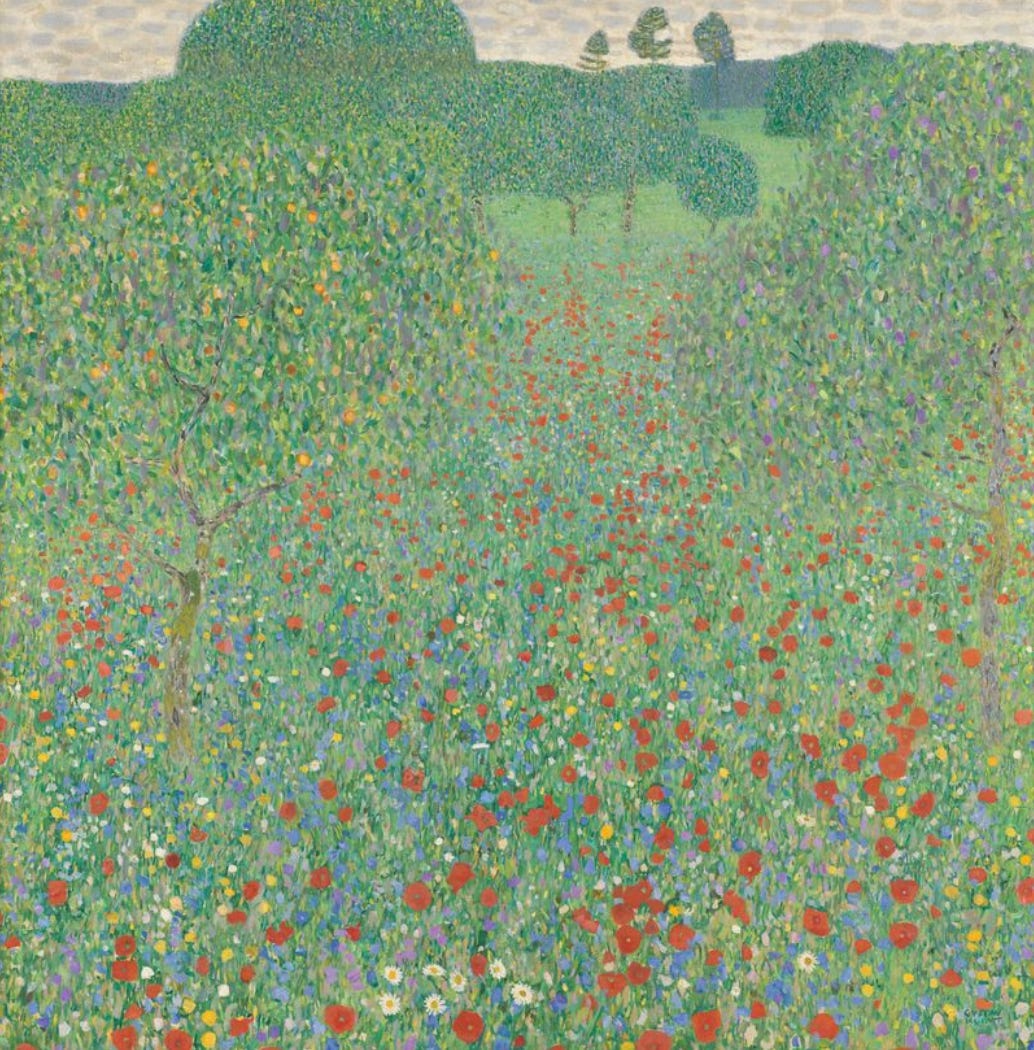
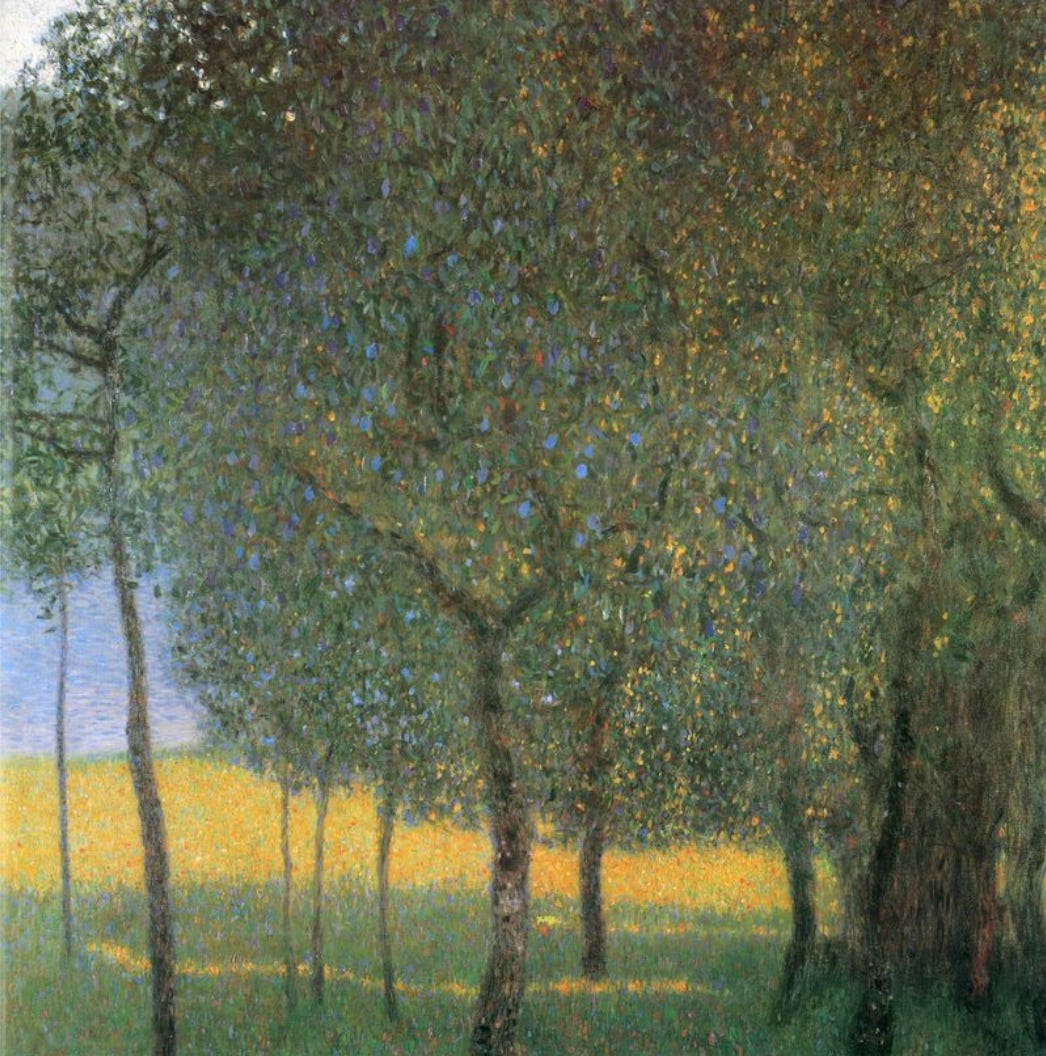
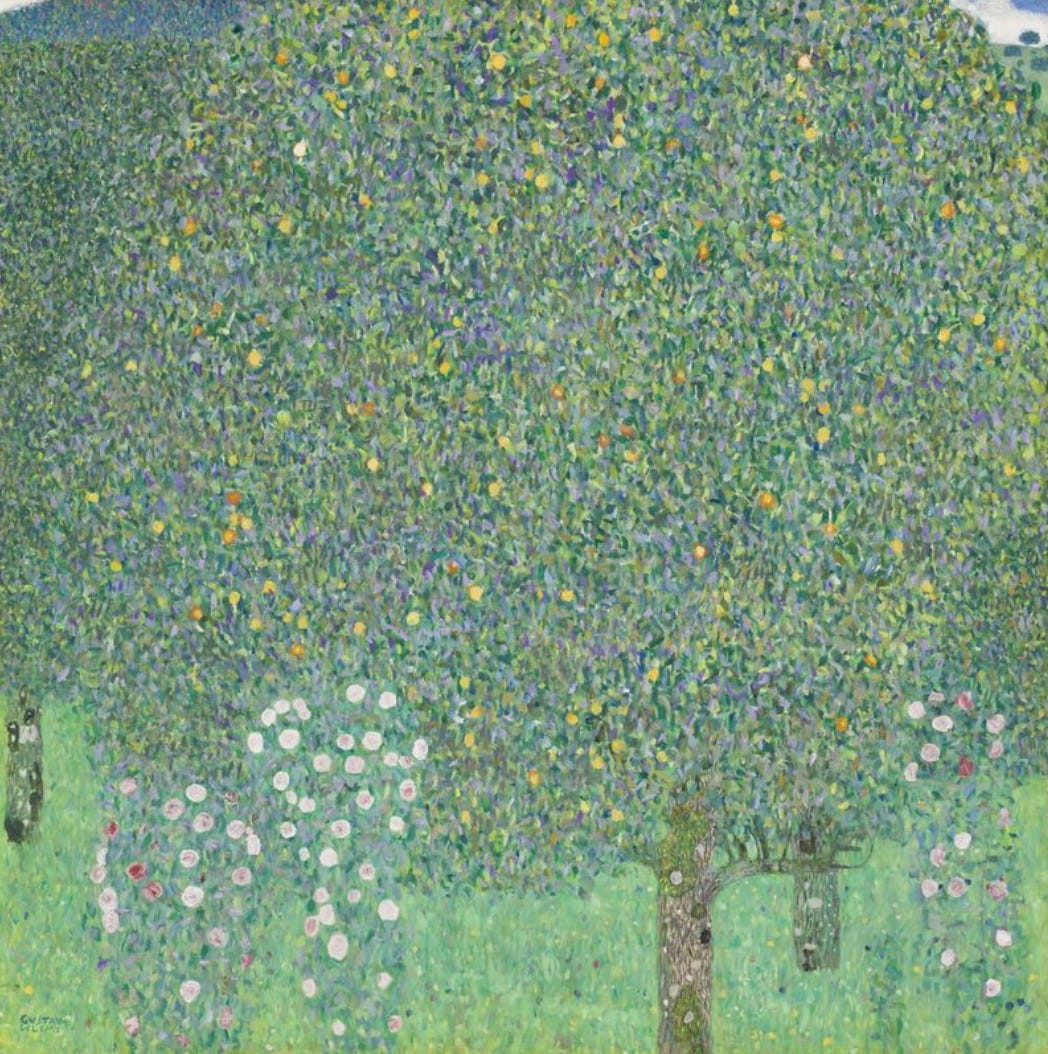
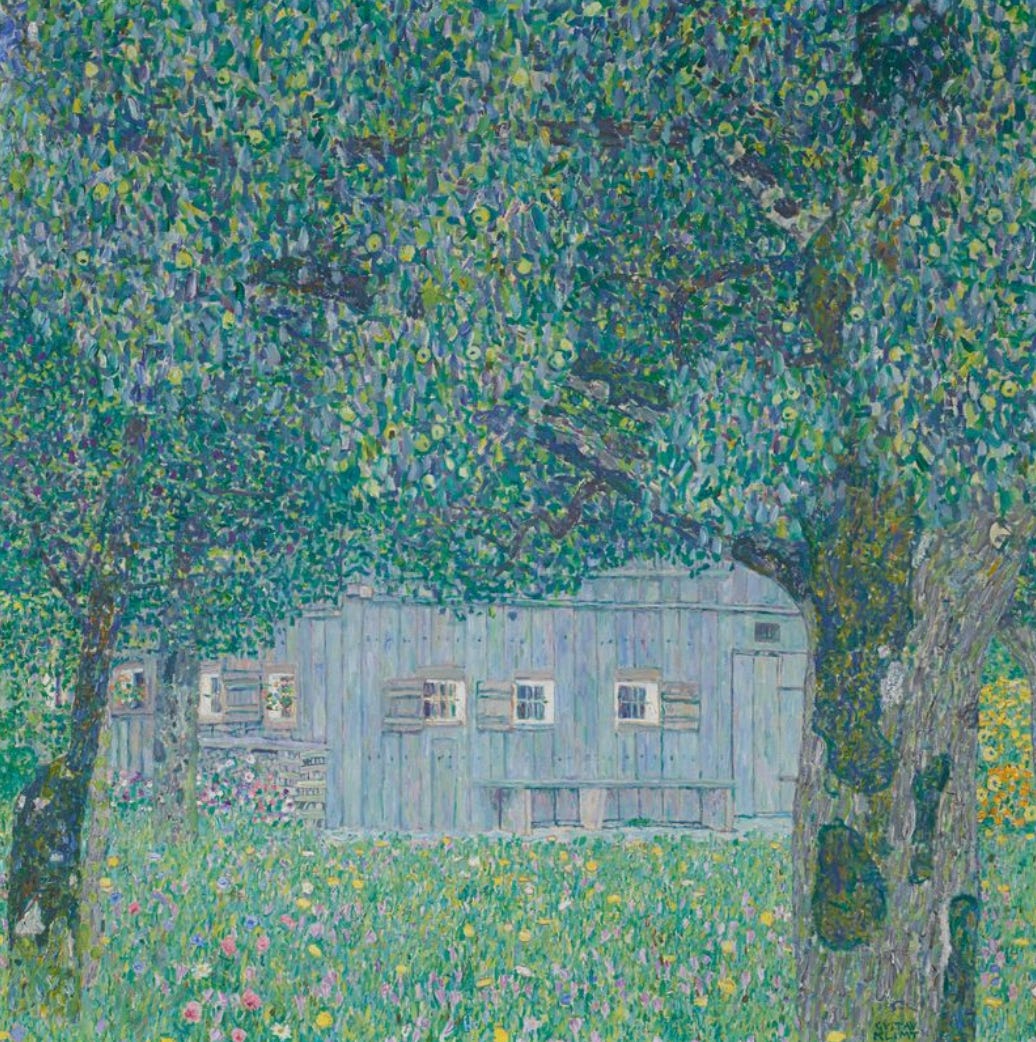
Art by Gustav Klimt (1862-1918).
 | A guest post by
|