


Editor’s note: This essay contains discussion of self-harming behaviors. Reader discretion is advised.
The email came when I was walking down the south campus stairs. It was from my college’s online classroom software, a direct message from a name I didn’t recognize. Subject line: “Checking In.”
I was used to the outpouring of emails at the beginning of every semester. I assumed this one was from a TA introducing themselves, or an eager freshman wanting to set up a study group. I opened the email and began to skim. “I’m sorry if you feel intruded upon, but I wanted to make sure you’re alright. I noticed you have scars on your arm, which didn’t bother me until last week, when I thought I saw a new cut.”
I received multiple quirky messages from peers during my time in school, but this one caught me most off-guard. I’m certain classmates had noticed my self-harm before, but I’d never had a complete stranger reach out about it so directly. Like the cuts on my arm, this acknowledgement stung. It felt intrusive. However, it also caused me to realize something important—I could not continue to ignore and run from these conversations.
Self-harm is a behavior that can be difficult to explain and even more difficult to understand. Self-harm, also known as non-suicidal self injury (NSSI), is defined as “intentional self-inflicted damage to body tissue without conscious suicidal intent.” It manifests most often as cutting or severe scratching, burning, or hitting. It’s often linked with mental health conditions such as anxiety, depression, PTSD, bipolar disorder, and borderline personality disorder; disordered eating or excessive exercise can also be considered forms of NSSI. The goal of self-harm is not to cause death; there are many reasons for self-harm, such as finding relief from mental pain, ‘punishing’ oneself for perceived inadequacy, exercising control over the physical body, responding to trauma, breaking cycles of apathy and anhedonia, and many more reasons—each unique to the individual. It is important to note that though self-harming behavior and suicidality often coexist, the action of self-harm does not always mean a person is actively suicidal.
I started self-harming during my freshman year at BYU. This is later than average, and my reasons for self-harming have evolved in the years since I began. At first, it was mainly an outlet for mental anguish and stress; however, I also wanted others to notice. I wanted to be able to see my internal pain reflected on the exterior. I never showed off my self-harm, but I did not take extreme action to hide it.
Eventually, a roommate realized what was going on and attempted to discuss things with me, but by that point self-harm was an outlet that I was unwilling to abandon. I felt I was beyond saving, and I was cutting even more to cope with a recent traumatic experience. I no longer wanted attention; I was addicted to the behavior and the dopamine it created.
For me and many others who deal with NSSI, the urge to self-harm persists throughout life despite treatment. Part of this is because self-harm produces dopamine; even though it is technically a harmful behavior, it can create a rush of emotion. This can be especially appealing to those who feel numbed by depression.
Despite working with a therapist for many years, it continues to be painful and awkward to discuss my self-harm with others. Yet, I know I’m not the only one. I see people with scars at grocery stores, concerts, swimming pools—that’s not even counting the people who self-harm in inconspicuous ways or wear high-coverage clothing. There are legions of us out there, but we are rarely vocal about our struggle. If you’ve ever seen the Instagram comments on a post by someone with self-harm scarring, it’s not hard to understand why—no matter what the post is about, there are always comments calling attention to their NSSI, and these comments are often extremely cruel. Why is NSSI met with derision, doubt, or at worst, encouragement to go further? What makes people react so strongly to a behavior that, though confusing, does not affect them?
Though mental health awareness and advocacy have come a long way in recent years, I do not think it’s bold to claim that mental health conditions still carry a significant taboo. There is shame tied to mental illness and NSSI among members of The Church of Jesus Christ of Latter-day Saints, as well as in the overall Christian sphere—yet Abrahamic religions have included several forms of self-harm. Sackcloth, a clothing designed specifically for discomfort, was worn during biblical times to display mourning or penance. Self-flagellation—the practice of whipping oneself—is a more extreme attempt to atone for the sins of the natural man. Concepts of personal sacrifice and self-denial persist in contemporary practice; chastity and fasting are examples of discomfort in the name of religion. Both are usually low-risk, but denying basic needs can cause harm if done to the extreme.
These historic and modern methods of “overcoming the flesh” (2 Nephi 4:17) exist to bring one closer to God. Religious self-harm is not the same as NSSI—self-punishment can be one catalyst for NSSI, but NSSI is a more complicated mental health issue—yet the existence of religious self-harm indicates that there was once a context in which the idea of self-harm was acceptable. Religious self-harm was sometimes in response to sin, which may explain why NSSI today can be met with shame and derision. However, there is another, more revealing instance of NSSI depicted in the New Testament: the exorcism of the Gerasene man in the synoptic gospels (Matthew 8:28–34; Mark 5:1–20; Luke 8:26–39 NRSV).
After calming the sea during a storm, Jesus comes to the other side of the sea and hears of a man (two men, according to Matthew) who is possessed by unclean spirits. The Gerasene man’s actions signal extreme distress while under the power of these spirits. He lives in a tomb, isolated from others (Matthew 8:28; Mark 5:2; Luke 8:27). People attempt to bind him, but he breaks the chains. He frequently cries out and cuts himself with stones (Mark 5:5; Luke 8:28).
When Jesus finds and speaks to the man, the evil spirits respond by saying, “My name is Legion, for we are many.” Christ casts them out, and they possess a herd of swine—causing them to run off of an ocean cliff to their death.
The Gospels do not indicate whether the man’s self-harm was caused by mental distress, or if the unclean spirits forced him to hurt himself. The scripture states that after the exorcism of the Legion, the man is “sane,” but there is no clarification about his struggle with self-harm. We do not know if he ever feels the urge to harm himself again; all we know is that he is told to live and act as a witness of Christ (Mark 5:19; Luke 8:39).
To me, this is a beautiful story of hope and healing. For others, it can be a sensational story about casting out evil spirits. Mass paranoia surrounding demonic rites and possession grew during the Puritan Age, and again during the Satanic Panic of the ’80s. Any behavior that could be linked with the “devil” was feared: rebellion, rock and roll, and yes, NSSI. If this scripture story was someone’s only source of knowledge about self-harming behavior, it would be easy to conclude that self-harm is evil or demonic, but this is not true. NSSI is not healthy, but like all trials and temptations, it can be eased thanks to the Atonement of Jesus Christ. He is the one who helped the Gerasene man find relief.
Even outside of a religious framework, it’s clear that perceptions of self-harm are shaped by fear and ignorance. This narrow-mindedness often leads to a dangerous conclusion about those who self-harm: they’re just doing this for attention.
Research indicates that isn’t always true. All self-harm/NSSI falls into two categories: the desired outcome is either intrapersonal (self-influencing) or interpersonal (influencing others). My current relationship with self-harm would be categorized as intrapersonal; I want my behavior to go unnoticed, as it has brought mostly negative attention. My supervisor at my campus job made jokes about my arm; he said I looked “emo,” assuming the wounds were from an inconveniently-placed accident and not the very behavior he was mocking. My mom thought I was coping with guilt and asked leading questions about repentance. My ex-boyfriend looked at me with simpering eyes, begging, “Please stop… do it for me?”
None of these approaches “saved” me. Neither has my work with a psychiatrist and therapist, or my faith in the Atonement of Jesus Christ. Instead, for me it comes down to self-control. I have to make a conscious choice to lean on other, healthier coping mechanisms. One especially effective coping mechanism for me has been creativity, especially sewing clothing and quilts. When I am creating something else instead of destroying myself, I can get the same dopamine that my brain is craving—but in a healthier and more productive way.
I no longer self-harm for attention, but that doesn’t mean people shouldn’t ask me about it. It’s not easy for me to talk about, but I’m working to become a better advocate because I know the stigma against those who self-harm will not change unless we have these conversations. Self-harm is usually an indicator that someone is going through something big; even though self-harm is difficult to talk about, it needs to be discussed—on the off chance that someone is self-harming as a cry for help, it’s better to be safe than sorry.
I believe those who self-harm need to be advocates for the vulnerable whenever possible, and those who do not self-harm need to approach those who do with empathy. And if you struggle to have empathy for someone who exhibits behaviors you consider to be “attention-seeking,” it’s a good start to ask yourself this: if someone is so desperate for help that they are hurting themselves, why would I mock them instead of helping them?
To support someone who is self-harming, I recommend being honest and open. Let them know you care about them and are interested in listening. Make sure they know they can rely on you when they need it. Please be willing to take no for an answer—if someone is resistant to talking about it, do not force the issue. It took multiple attempts for me to finally be willing to talk about my self harm, despite having a great support system. I cannot speak for everyone who struggles with NSSI, so be willing to adapt to meet your loved one’s needs. Most importantly, please do not mock or shame those who struggle with these behaviors.
After over a year of staying ‘clean’ from NSSI, I recently relapsed. I’m trying to have compassion for myself, but I’ve been overwhelmed with feelings of inadequacy and shame. I am frustrated with myself for having this struggle, and I am so tired of having to fight the same repetitive urges even after years of effort. This battle takes tremendous strength, and I am not strong all the time. The trial I’m facing may be unique, but the type of support I need is simple. People like me, the legions who struggle with NSSI, do not need anyone to “cast out demons”—we just need genuine compassion.
The message from my classmate was an excellent example of this: “I’m not trying to pity you or anything . . . Maybe they’re only old scars and are now a symbol of you overcoming something. I just feel that this is important enough for attention, just in case.” Her message didn’t end my self-harming—in fact, it was extremely uncomfortable for me, because I did not want that kind of attention in the moment—but I admire her and in hindsight appreciate her actions because she approached me with sincerity, which is how I imagine Christ approached the Gerasene man.
If you or someone you know is struggling with self-harm, support is available. In the US, you can call or text 988, the Suicide and Crisis Lifeline. If you are outside the US, please consult local crisis resources.
Dahlia Breiter graduated from BYU with a bachelor in English, but she's been writing poetry since her very first literature unit in 3rd grade. When she's not reading or writing, you can find her sewing—she makes clothing out of reclaimed textiles. She enjoys finding new life in forgotten things and using glimpses of the past to inform her writing.
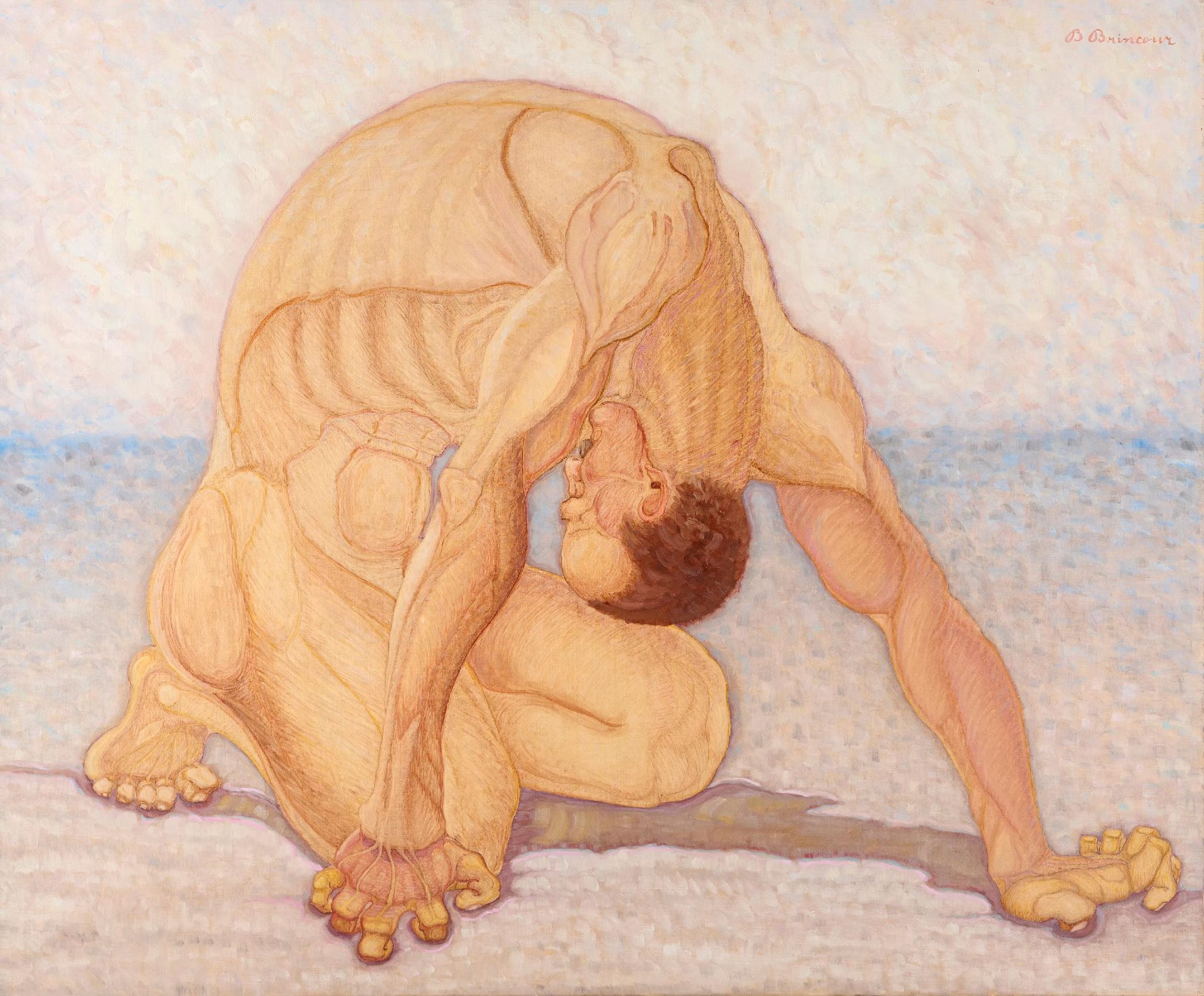
Art by Berthe Brincour (1879–1947).
