


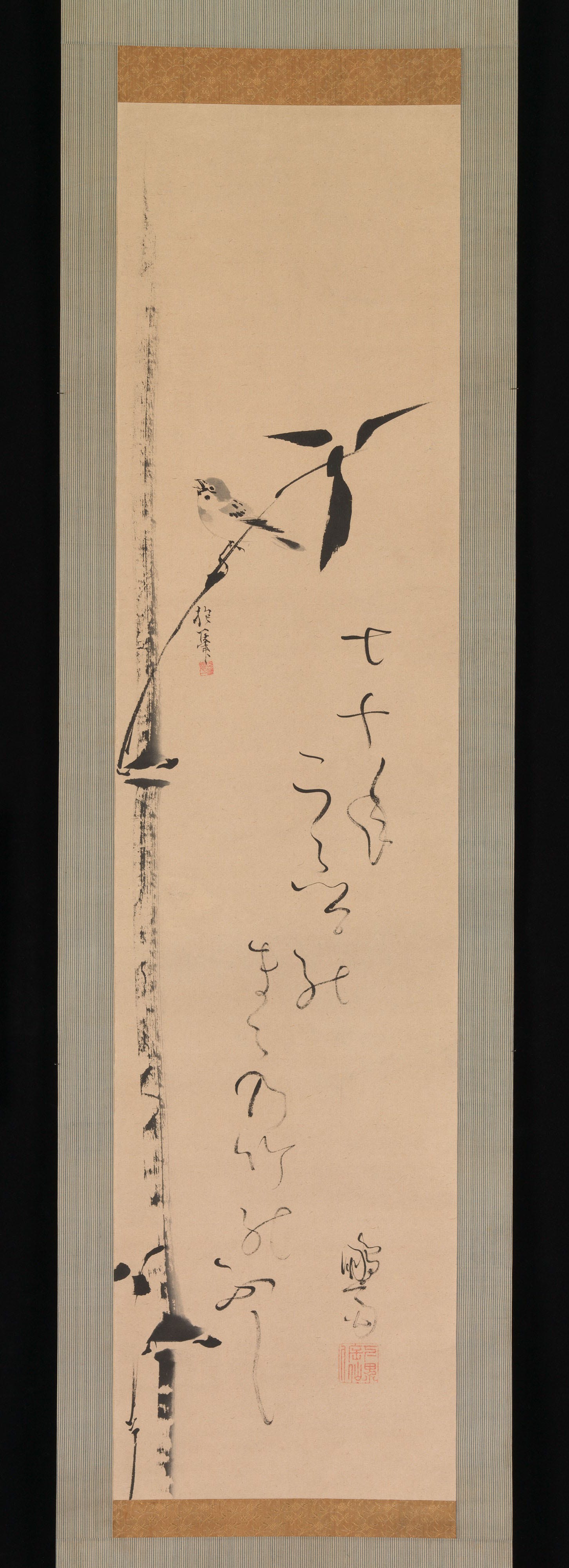
“The trick to life is to just keep breathing.” — John Landry
The first time I forgot how to breathe was at the end of sixth grade. I had been laid up in bed for a week with the measles, barely able to rouse myself to stumble to the bathroom or choke down some mild food. At eleven years old, I was old enough to care that I hadn’t showered or washed my hair for over a week, so when I could finally sit upright without the world spinning around me, I dragged my body into our tiny bathroom and pulled myself into the tile-lined shower. I started feeling weak while I was washing my hair, and my hands started tingling like they were falling asleep, but I pushed through until I had rinsed out all the soap and turned off the water. I struggled to wrap myself in a towel as pinpricks of pain filled my hands. I crawled to my bed just before my fingers started to seize up. I watched in horrified fascination as my fingers turned into rigid claws, frozen in place as if they belonged to some other creature and weren’t part of my body at all. My breath was coming in short, shallow bursts, which seemed like a natural consequence of my hands’ transformation rather than its cause.
I don’t remember how that incident ended, whether I called out to my mom for help or just crawled back under the covers until I was asleep again. I chalked the experience up to another weird part of the measles, along with the way it had defied my vaccinated state, made me miss my sixth grade graduation program, and brought the public health workers out to draw my blood for research. But the memory has stayed vivid in my body.
Hyperventilating is a strange problem, almost like too much of a good thing. The body needs oxygen to survive, and usually we take in as much as we need without even thinking about it. But when we hyperventilate, we breathe too deeply and quickly, upsetting the balance of oxygen and carbon dioxide. The lack of carbon dioxide affects the flow of blood and leads to tingling hands, muscle spasms, or fainting. In an attempt to get the breath we crave, we cause the body to shut down.
Why would anyone try to get more air when they normally do just fine with the breaths they take? What problem is hyperventilation trying to solve? It seems like an inability on some level to accept that there is already plenty of air, that breathing can happen just fine without extra effort and stress.
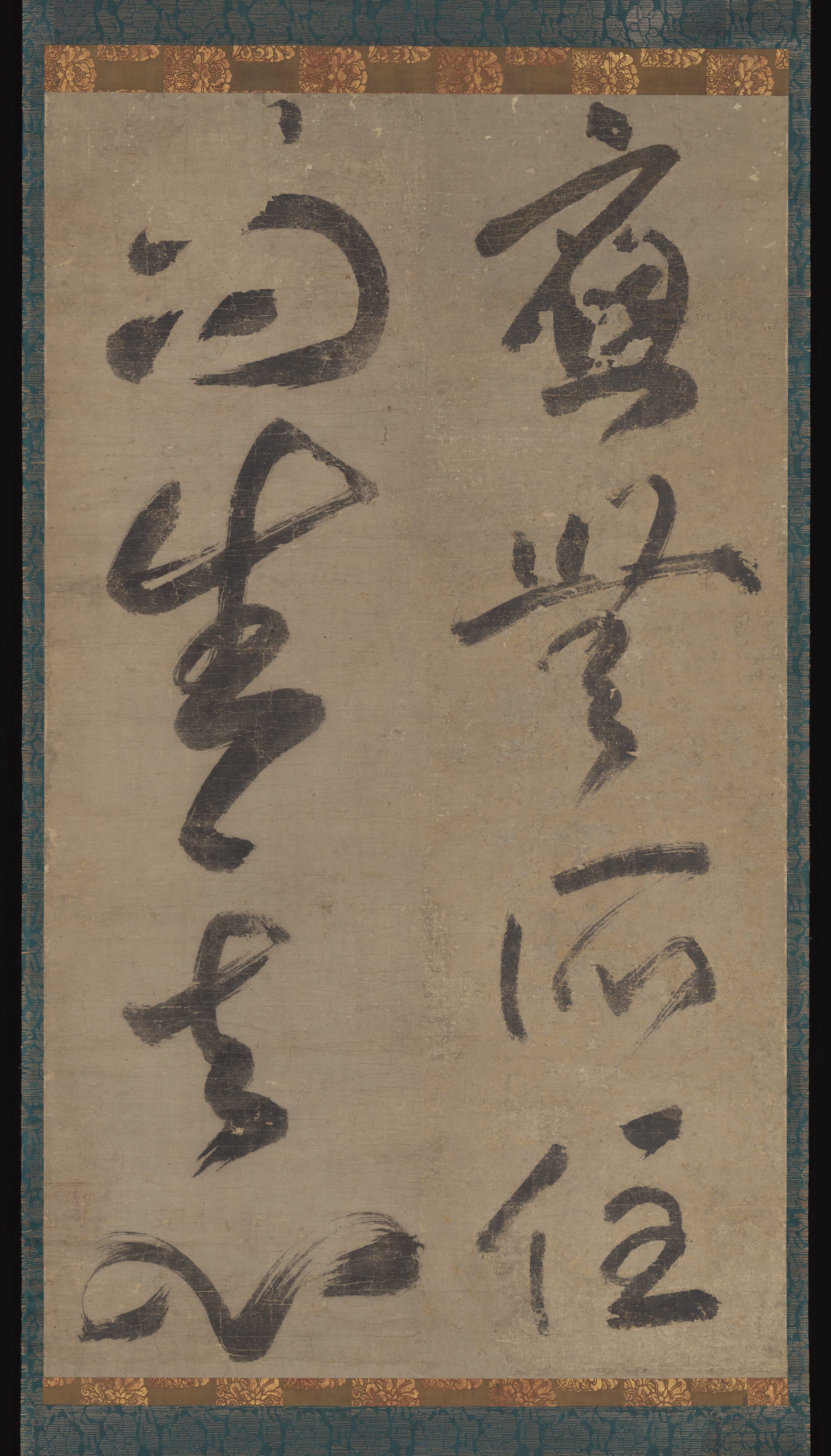
Oliver Cowdery, working as scribe to Joseph Smith, seems to be suffering from a sort of spiritual hyperventilation in section 6 of the LDS Doctrine and Covenants: Instead of accepting and breathing in the peace and guidance he has already received about the truthfulness of the book he is working on, he wants a “further witness” (D&C 6:22). The answer he has already received has somehow been forgotten or seems insufficient, but here the Lord reminds him that what he got was enough: “What greater witness can you have than from God?” (D&C 6:23). Already surrounded by the “air” of divine revelation, Oliver seems to be struggling to breathe. God reminds him that he can relax and accept the abundance he has already been given. And the reminder seems to work. Like my younger self, Oliver is eventually able to find peace with what he has and keep moving forward with the project.
But like Oliver, I wasn’t able to hold onto that peace forever. My second encounter with serious hyperventilation was in college, when I was about to get my wisdom teeth out. I didn’t feel nervous at all. I had always had positive experiences at the dentist; in fact, I enjoyed going to get my teeth cleaned, probably because I had no cavities and always got praise for my excellent oral hygiene. I knew that getting wisdom teeth removed was normal and nothing to worry about. But somehow my body understood better than my conscious mind that I was afraid. The fear I didn’t know I was feeling started to show itself in my hands, as the tingling started in my fingers and then began to intensify. I mentioned to the doctor that I was starting to lose feeling in my hands, and people around me sprang into action. “It’s perfectly normal to feel anxious before surgery,” I was told. But I didn’t feel anxious. I felt just fine, except for my tingling hands. Within seconds, someone was holding a brown paper lunch bag in front of me and instructing me to breathe into it. Instead of the deep gulps of air I had been taking, my body needed to breathe its own breath back again. Within a few minutes, my hands felt back to normal, and I was ready for the surgery, which went as smoothly as I had expected.
The treatment for my “overbreathing” at this moment was in some ways similar to what God told Oliver in his moment of crisis. I didn’t need more oxygen or deeper breaths; I needed what I already had: the carbon dioxide I was breathing out too quickly. I needed to hold onto what I had already received a little longer instead of desperately seeking new and different air.
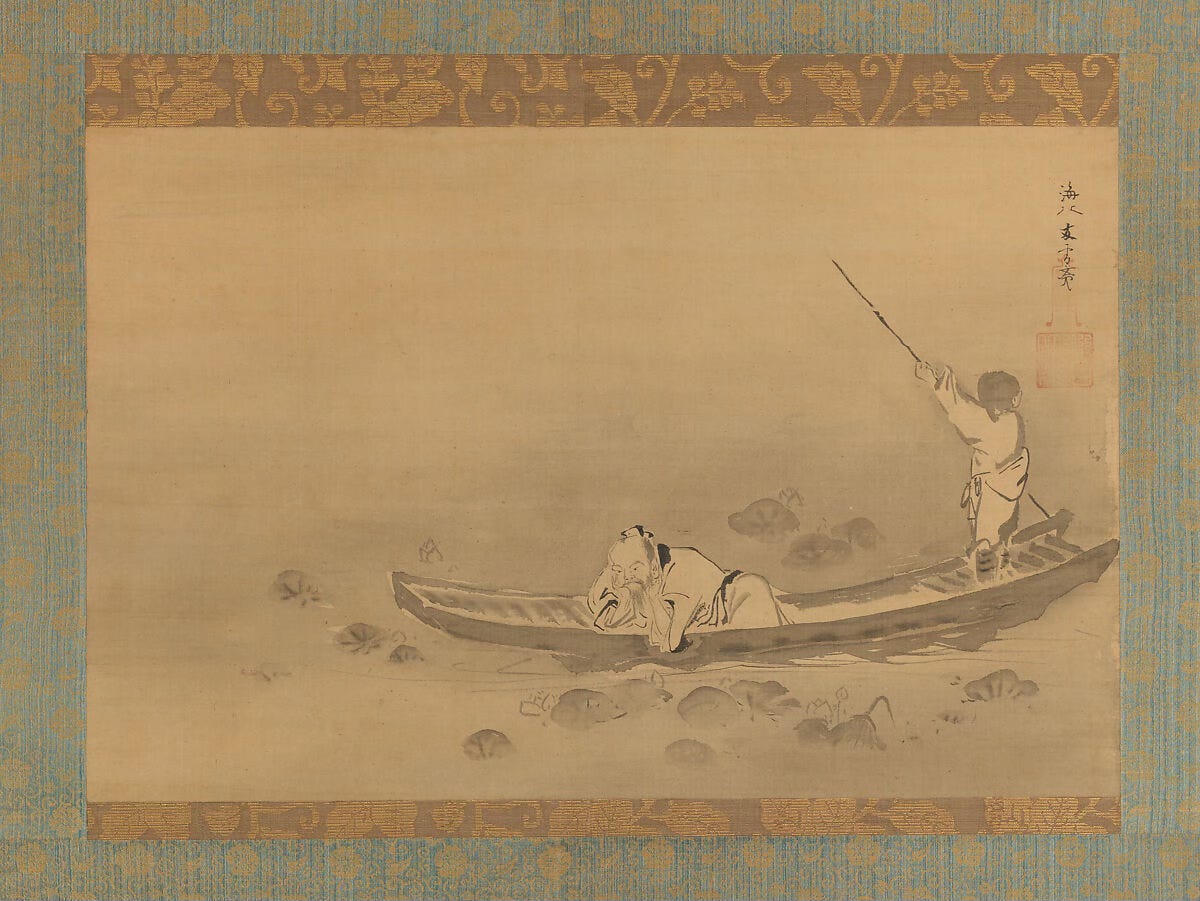
Why is it so hard to find contentment in what we already have? In chapter 30 of the book of Alma in the Book of Mormon, the prophet Alma speaks to a challenger named Korihor, who insistently demands a sign of God’s existence. Alma’s first response is not to give Korihor some new evidence of divine power, like a miracle or unexpected event. Instead, he points the man back to the evidence all around him: the scriptures, the abundant earth, the movement of the planets: “Thou hast had signs enough; will ye tempt your God? . . . The scriptures are laid before thee, yea, and all things denote there is a God; yea, even the earth, and all things that are upon the face of it, yea, and its motion, yea, and also all the planets which move in their regular form do witness that there is a Supreme Creator” (Alma 30:44). The proof had been there all along, but Korihor didn’t see it. He was so focused on judging God’s existence on his own terms that he was unable—or refused—to see the abundance around him. What got in his way? Wanting evidence of God seems like a good thing, but in Korihor’s case, that desire seemed to blind him to the evidence that was already there. Only later was he able to admit that he really had “signs enough”—the evidence was there all along.
Although Korihor’s inability to “breathe” seems to be at least partly his own choice, his example is still a helpful reminder of the dangers of “looking beyond the mark” and trying to force God to play by our rules. One of the central tenets of many ancient religions is meant: learning to let go of our white-knuckled clutch on what it is we think we need out of life. In the Bhagavad-Gita, the god-turned-man Krishna counsels his friend Arjuna to “act without attachment in whatever situation, for by the practice of detached action, one attains the highest” (Chapter 3 verse 19).1 The Daodejing advises readers to “always rid yourself of desires” (section I) and to “have little thought of self and as few desires as possible” (section XIX).2 In the Lotus Sutra, Buddha states that his teachings are meant “to free the sentient beings from their various human attachments” (section 6a).3 Nonattachment means relinquishing control—or, more accurately, the illusion of control—over the world around us and even our own lives. It means acting without focusing on the results of that action and letting go of your own hopes for what might happen. It means breathing in the air around us and letting it go without trying to out-think our bodies. It means choosing not to judge my own body for hyperventilating and instead viewing it with compassion and curiosity. In an American LDS culture that can sometimes seem intolerant of anything less than perfection, nonattachment offers the alternative of accepting any and all outcomes without labeling them as desirable or undesirable. It suggests that, in the words of Alexander Pope, “Whatever is, is right.”4
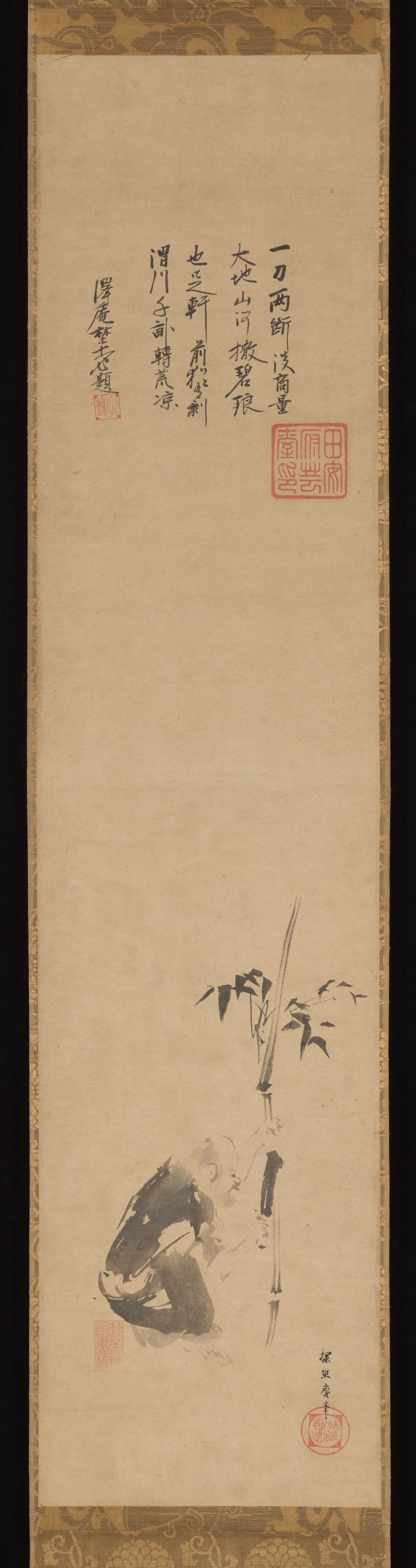
It seems appropriate that breathing is so central to religious practices like yoga and meditation. What happens with the body is inextricably bound to what happens with the mind. In principle, all this sounds easy. According to contemporary music, all it takes is making a decision: Just breathe! Faith Hill sings it in a country song about having “nothing left to prove,” when all she and her lover need is “just to be.” Jonny Diaz sings a similar message in a Christian song, in which Jesus calls his followers to “Come and rest at My feet and be, just be. Chaos calls but all you really need is to just breathe.” Just breathe! It sounds so simple, like a trivial choice that anyone can make just by wanting to. But I suppose the existence of the songs suggests that it isn’t always as easy as it seems. This most essential of human actions can apparently be enough of a challenge that pop singers need to remind us to stop getting in its way.
Through the years since those early hyperventilation scares, I have only felt little reminders of that propensity in me: tingly fingers when I get up to sing a solo, an impulse to breathe too quickly or deeply in a stressful situation, a heightened consciousness of the unconscious process of respiration when my mind searches for something to worry about. But recently, on a bus in Peru, my body decided I needed a stronger reminder. In retrospect, there were lots of causes for the episode: I was alone with a group of strangers on a tour bus that I wasn’t sure I really wanted to be on. I had awoken really early, which tends to make me feel a little dizzy and lightheaded. I was starting to feel a bit nauseated—often an early sign of motion sickness for me—and I worried about what would happen if I got really sick. I was heading into an unfamiliar situation after several days of other unfamiliar situations.
My mind was so focused on the fear of getting carsick that it took me a few minutes to notice the tingling in my fingers and the shallow, rapid breaths I was taking. I seemed unable to stop my hands from freezing up and turning rigid. I felt separate from my body, powerless to stop my fingers from clenching together like hard plastic oven mitts. After a few minutes of silent panic, not wanting to draw attention to myself, I remembered the paper bag full of snacks the tour guide had given me at the beginning of the early-morning ride. I scooped it up with my almost-useless hands, dumped it out on the seat, put the bag up to my mouth, and started to breathe in my own breath. The seats around me were empty enough that no one was there to witness my mini-crisis, so I could focus on what I needed to do: just breathe. The comforting effect of receiving my own air back again was quick and powerful. My hands and body relaxed, and eventually my mind did as well. As I bounced along that chilly Peruvian highway, I slowly let go of whatever desire for control over the situation I had wanted and accepted my fear, my discomfort, and my anxious hope for an exciting trip. I gave myself up to the abundance of air, of divine love, and of complicated life around me. For that moment, I let what I had been given be enough and just breathed.
Jennifer Black teaches English Literature and composition at Boise State University and travels the world in any spare time she can find.
Art by Kaihō Yūsetsu (1598–1677), Kano Tan’yū (1602–1674), Musō Soseki (1275–1351), Sakai Hōitsu (1761–1829).
Gavin Flood and Charles Martin, trans., The Bhagavad Gita: A New Translation, (Norton, 2013).
Laozi, Tao Te Ching, trans. D. C. Lau (Penguin Books, 1964).
Tsugunari Kubo and Akira Yuyama, eds., The Lotus Sutra, rev. 2nd ed., (Numata Center for Buddhist Translation and Research, 2007).
Alexander Pope, “An Essay on Man: Epistle I,” Poetry Foundation, accessed August 22, 2026, www.poetryfoundation.org/poems/44899/an-essay-on-man-epistle-i.
