


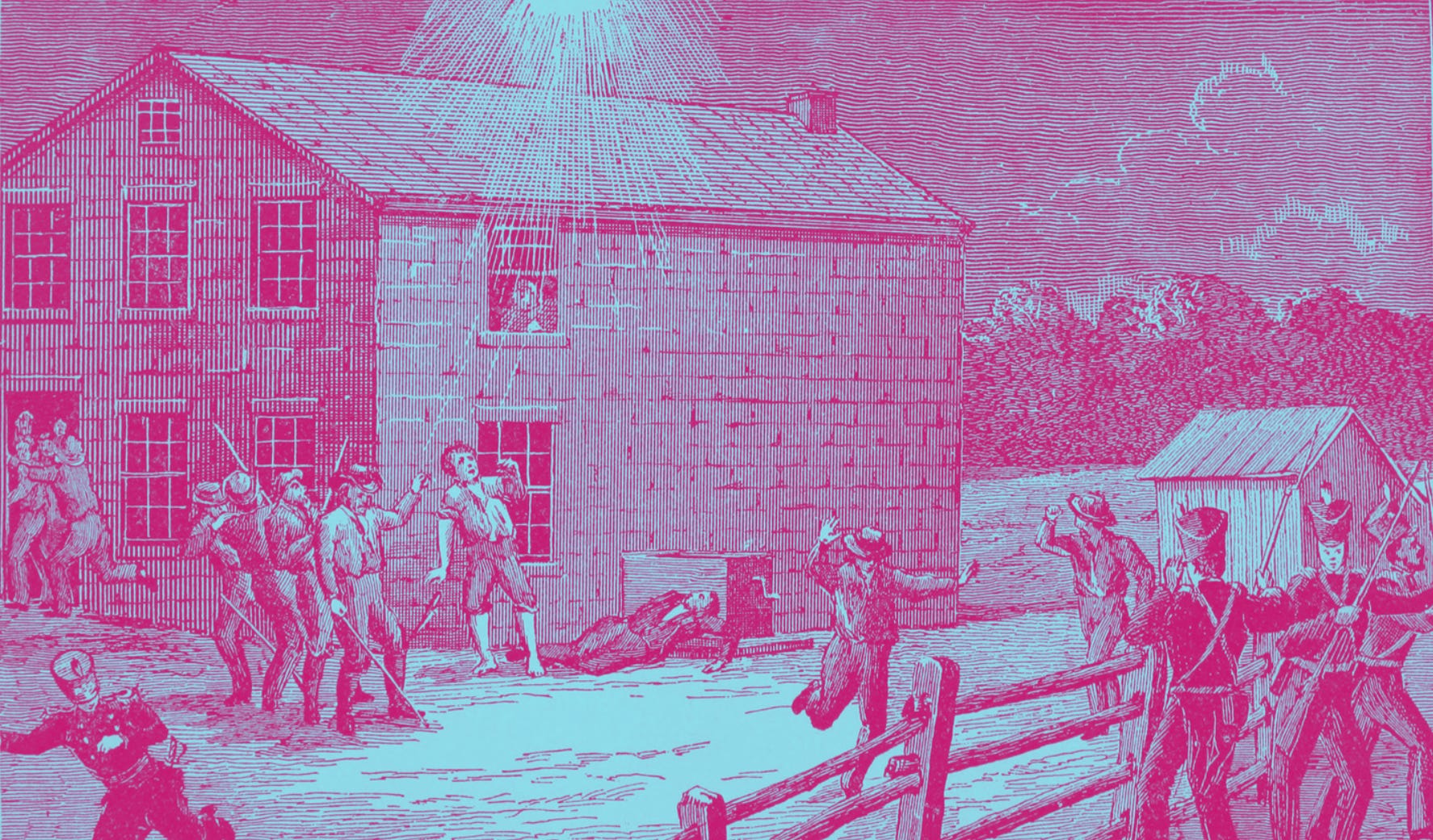
Prologue
1
This prison house of mine would ill-annoy,
As if a Punic enemy to stop,
This hallow-handed work progressing on;
A knee, yes, everyone shall bend thereto.
And though I die before the place is done,
Wherein the way to Other’s known apart,
I mean herein to signify the times,
And seasons when the way appeared to me.
2
O prison guard, as thou hast preyed me here,
Thou art or shalt become the man I tell,
My history, the which no man has known;
The wisdom of a king whose death was well;
Of where I learned of liberty in chains;
Or when the river men appeared to me;
Of books for breathing words beyond the page
Revealing worlds unknown ‘til latter days.
3
Though tacit to repute or signal-make,
I am in style and office owing to,
The false reports of persons ill-disposed,
Induced to disabuse the public mind,
As well to write the lady most elect
Who chased away all vain philosophy
And me consoled and scribed my poetry—
—although it’s lost, what all she wrote for me.
4
As it was said: no greater love’s than this
Than life laid down for friends but what is life
If nothing to my friends until laid down?
‘Tis love like that in lambs to slaughter led
Or sheep before the shearer standing dumb;
At least and last I came with conscience clear
And mind that lacks a fence to separate
Myself from heav’n which is where’er I fly.
From the Rivers to be Seized
5
The first day very early after I
Came down the hill with word in hand and sat
Before the lady most elect that she
Could see the tablets, she began to weep;
Thought I my countenance had given fright;
Full-lit it was and shone when I came nigh.
She bade me veil the plates until the day
The Messenger would carry them away.
6
And thus it was the lady touched them not
Until they had ascended from the press
That fed five thousand who were made to sit
And read amid the fragments I took up.
And when she saw it made among the reads,
She could no longer hide but took for it,
Her vessels shattered to enlight the walls,
Of where the readers had been made to sit.
7
It was the first, at last, the place we built,
Wherein the way to Other’s known apart;
The pattern of it all by spirit had,
According to what Other showed to me.
For in our midst was Other though unseen,
But soon to come: the day to see and know,
And part the veil of darkness o’er the mind,
And blest by Mercy pure to Justice see.
8
In facing East it looks to Other’s rise,
And reads He will establish in His strength;
‘Pon entering’s a court where’s bread to shew,
His presence after pray’r from altered hearts.
The court is lit by windows branching ‘round,
In shape as upturned almonds at the top.
Behind the veil that separates the host:
A pulpit to be overlaid with gold.
9
A pulpit, in the Greek, is many-foot;
Appropriate where such were manifest.
Upon the breastwork of the pulpit stood,
A foot when shod’s beyond me to unshod.
There spread where e’er that sacred foot impressed
A pavéd work of gold like amber wave.
From underneath His eyes that shown with fire
There billowed forth His voice with wat’ry rush.
10
It was the first, at last, Who stands before
Us all to plead with Justice on behalf
Of us for whom He was beatitude.
‘Mid us He died and life again betook
For us that all our sin He may belie,
And us our head lift up in joy He bids,
Rejoicing us, accepts the place we built;
It was the last, at first, we stood before.
11
So in the place we built had Other come
To us in Mercy as He’d come to me
When I had reached the fanum in the wood;
For we the will of heaven’s Justice do,
And not as those content to say, “Lord, Lord,”
To Other nor pollute the place we built.
In consequence His blessing He pours out
‘Pon tens of thousand-thousands in His house.
12
And when the sight of Other closed to us,
From heav’n again another conduit:
Before us standing now a river’s son
Who like me saw a word in nature lit
And like me brought a volume forth from it;
As I, so he brought tablets from on high
And built a tabernacle as a place
According to what Other showed to him.
13
The river’s son stood forth, his staff in heft,
No horns preceding him but head arrayed
With light that shone as he to us came nigh;
Upon a mount he anciently declared
So much of Other’s law as was received.
At time’s meridian another mount
Whereon his figure crossed was Other’s will;
And now in Other’s wake to us appeared.
14
To us committed he the gathering
Of all the fathers and their families
Whose struggle in the face of Justice gave
A name to reach the four parts of the earth;
To lead from out the diasporic north
An exodus tenfold in magnitude
To fill the north and south and all the world.
The key t’unlock the scattered’s given me.
15
Although the river’s son on pulpit stood
And saw the promise Other swore to him,
Upon our land unto our utmost sea
He came not hither: Other had forbade.
Mine eye had dimmed to weep the river’s son
For he had laid his hands upon my head
And gave me full the spirit of wisdom
As he and I knew Other face to face.
16
And when the river’s son had left our sight
There next appeared a man unknown to writ
But known to those writ of in ancient time;
This man had dwelt between two rivers since
He ’ccompanied the house by Other called
To have posterity as prophesied
That’s fixed in one but numbered as the stars
And as the sand whence Other’s line is drawn.
17
The man unknown beheld as I foresee;
The flight of both our peoples o’er the plains;
As well the loss of any looking back,
A saline memory best trodden down.
As I, the man unknown was witness to
The sight of Other and three messengers
That every generation after us
Should blesséd be in us and in our seed.
18
With this good spell committed unto us
The man unknown withdrew to whence he came.
I did not later learn just who he was
Or had been when he was a mortal man;
The man unknown had never raised a knife
Against a son nor took a battle tithe;
He was a messenger for Other’s sake
Which done, it mattered not where e’er he went.
19
Upon us burst another vision great
And glorious, another messenger
Who anciently was hidden at a brook
Before the river that would overflow
The head of Other as our pattern shows.
The hidden man had long partaken of
A meal twice daily borne of wing o’erhead
But never once of death did he partake.
20
The hidden man who stood before us spake
Of children as the end of father’s heart
And father’s as the end of every child;
As well he said the time was fully come
The very time by ancients spoken of,
That he, the hidden man, be sent before
The day of dread and greatness at the door
The day when Other treads the earth again.
21
Therefore into our hands committed he
The dispensation o’er against the curse
That overhangs the whole of earth unless
A seal is made of links that wind between
The arms and hands of generations passed
And yet to come in one eternal now;
Without the chain forged in the place we built,
The day when Other come’s a waste and curse.
22
But seized were we, O prison guard, not long
Beyond the time within the place we built
When we from rivers three had messengers;
Yea, seized from out the midst of family,
And made to see a sword upon them drawn
That creeped the closer as they drew to me,
And made were we to see in Liberty
What Other underwent and hath o’ercome.
23
Though borne in chains, in everything made free
As Other taught: to serve is mastery.
For as in Adam or by nature all
Are fallen that Other may condescend
Beneath all things with Mercy that He know
To succor us in our infirmity
According to the flesh and give the blot
Beneath the sight of Justice to our sins.
24
And thus I fell and ‘til I was restored
I fancied none had felt as low as I;
Myself as whelmed the most excepting none.
Perhaps I had known favor previous
But failing that, inadequate thereto,
There’s naught but disappearance left me now.
What joy remains resides in those I left,
For lacking me supplies the joy I take.
25
“O Other, where art thou?” said I for me,
As all perform in deepest tragedy
Of self when self requires another stage
’Pon which to drop its tears and cheer its rage.
I wept the blood my people had foregone
As if unknown to One Besmeared Upon.
And when the wickedness was out me bled,
My self had gone and Other come instead.
26
I heard His voice, O prison guard, and “Son”;
His peace was unto me as He’d begun
To mete the brevity of all my woes
And promise yet a triumph o’er my foes.
He spake to me the trust and loyalty
I had in friends, unlike antiquity
When Job, deprived of health and wealth and kin,
Was heaped upon by friends alleging sin.
27
When from the hellish mouth of Liberty
I could desert its gaping after me,
We set our capitol upon the banks
Whose currency was river-fed in thanks
To Other Whose command to beautify
Our Commerce newly-gained would show that I
Am as the messengers who came to me
A river man composing prophecy.
In Letters
28
Within the city we have lately built
Where I was safe—at least from enemies—
A little past two years ‘ere presently,
There came to me a letter to request
The whence and whither of the work that I
Am called and authorized of Other to
Establish in these final days before
The burnéd world’s astretch and rolled again.
29
But how, O prison guard, I asked myself,
Does one contain th’eternal in a word?
Before you cite the logos unto me,
Recall that wordplay’s not divinity.
‘Tis strange how those who lean on books the most
Are least inclined to entertain their source;
The source of Holy Writ’s a constant flow
And never fully poured in single draft.
30
A creed, a creed, are there not many creeds?
And still they ask of me another creed?
O fools, who chain my faith fast as my flesh,
Confine my mind and sever every tie
That holdeth quick to One Besmeared Upon,
I here thee give a creed that never ends.
Connected as it were to Other such
That further light from Twofold One is known.
31
‘Ere I embark to freight the articles
To anchor those upon the sacred main
That maketh all who sail thereon as saints,
I would address the mariners themselves:
The anchor in the sea ‘pon which ye sail
Is as a principle that’s founded on
Irrevocable doctrine lest ye think
That overboard’s a depth that ye can plumb.
32
Before ye sally back that Other once
In Holy Writ—whereat, ye can’t recall—
But only that He once tread on the sea
And even bid a rock to “come to me,”
Recall at least he bid to tread the top
And not to probe the deep which as the truth
Is great and dreadful past thy looking eye;
Remain where Other placed that rock to see.
33
The first by which we ought be understood
—And last, most like, our enemies will grant—
Is that in Twofold One we do believe,
Yea, Justice and His Mercy over all,
And Other Who’s the One Besmeared Upon
And in the Spirit that proceeds of these,
A personage, in truth, that knoweth all,
And fetterless to better feed the most.
34
Our enemy, who ought to be our friend
And brother in so great a cause as this,
Will take my words and accusation make
That we some other Savior introduce
Or make ourselves as gods who make more worlds.
To these inimic friends I would explain:
In body have I grasped the promises
Philosophy diluted anciently.
35
The second, ‘haps my sin original
That us from man divides more than from God,
Is that upon each man, we do believe,
A punishment will be for every sin
By each man done, and that respectively;
No son shall bear the weight of father’s sin,
And this from us ‘til even Adam ‘cept
For Other Who bore all for Twofold One.
36
While some hold man condemned before his birth,
More yet consider him by Adam cursed
Or worse than these: that Eve hath failed us all;
I stand apart declaring every man
Bears no more sins than unrepented of,
For as in Adam, or in nature, all
Are fallen, it is so that man may be,
And being might have joy through Other free.
37
The third, in essence, cent’ring what I teach
With all the rest appendages thereto,
Is that mankind is saved, we do believe,
And all of them, at least as many may
Who of their own free will and choice obey
What ordinance and law exampled in
The life of Other and by Justice giv’n,
That all made one to Them may enter in.
38
Between my should-be friends in Other’s cause
There rages on a controversy o’er
The nature of salvation, whether ‘tis
Upon the things we do or hardly so
Because what Other wrought is warrantless;
To each I give my hand affirming both,
For Other made infinity a gift
Commanding us to do good works for it.
39
The fourth, which hath to do with what good works—
or principles and ordinance—we do,
Is that, from first ‘til fourth, we do believe
To start with faith in One Besmeared Upon,
Which leads the penitent to think again
Or think beyond: not be, but to become,
Until immersed in waters, sin-remised,
And breathed upon by ghostly-handed gift.
40
In these consists what Other’s doctrine is
And there the gate for entering therein
Upon the way that Other represents;
From these to stray’s contending with the rock
For such are these: a rock amid the sea
That roiling o’er is poor theology.
Receipt alone of sacrament will serve
To light the way ‘pon which all must endure.
41
The fifth which lit on me in boyhood first
And then again whene’er the work required
Is that a man is called, we do believe,
Of Justice with His Mercy hallowing,
And that by prophecy and manumised
To hear and speak and teach of Other’s will
As well to give the patterns and the forms
Of Other’s life to all who follow Him.
42
Though some there are who stake authority
Upon tradition and antiquity
And some, protesting their inheritance,
Asserting independence from the trunk,
Will stake authority upon the roots
They hope to grow of branches broken off,
I stand apart from these, conversing deep,
With one who owns the vineyard and the tree.
43
The sixth, in line with what authority
By which I do the things appointed me,
Is that the offices, we do believe,
Conferred by Other on a dozen souls,
As well as those with charge to speak for Him,
And those that give to watch and teach His flock
—to message all the good of Other’s spell—
That once existed are to us restored.
44
Would not, O prison guard, ye think to find
Within a house the trappings of its lord?
And would ye not expect the servants there
To move and act upon th’authority
Upon them by their lord placed handily?
What if, on ent’ring in, ye found a change
In frame, appurtenance, and hired hands?
Must not the lord’s demesne needs be restored?
45
The seventh, from the latest following
And touching on that same lord’s legacy,
Is that in gifts and signs we do believe;
In singing out in Adam’s tongue or Eve’s;
In prophecy and revelations seen
With eyes for glory by transfiguring;
In making wholly sound the fallen man
And making fallen man a holy sound.
46
Ought not we find the same activities
Exampled by a lord to hirelings
Whene’er we venture to investigate
Whate’er it is remains of his estate?
What if we find a strange philosophy
Where once had been a lordly poetry?
And reason stretched to logic o’er a loss
That shows where thief broke through as rust and moth?
47
The eighth, indeed another great offense
That’s taken though not given with intent,
Is that in Holy Writ we do believe
As far as borne across sufficiently—
Which is to say in language rendered true—
To understanding and to whence it came.
We like believe that Other’s witnessed in
The record once sepulchred now aris’n.
48
And what is meant in this, “To bear across,”
I heretofore have said but once again:
It is the power and gift of Other giv’n
Of which all are invited to partake.
It makes a letter’s spirit and its law
At one, to resurrect th’original
Redeemed, a voice to speak out of the dust,
As testament to One Besmeared Upon.
49
The ninth, upon us pouring every drop
From heaven let regardless of the spout,
Is that in every truth we do believe
Regardless of the time whence it came out,
As well as all continuing to fall
From heaven, quickening before the sun.
We like believe more things of great import
Will fall throughout the reign of Twofold One.
50
The light and truth of Other usward flows
Through channels worn by ancient messengers
Which runneth o’er our shoulders presently,
Invested there by hands that fished of men.
Though all may take the light and truth on them,
To some is giv’n to hold positions key
And fill the body as tributaries
Replenished through the reign of Twofold One.
51
The tenth, which hath to do with property
And its dispersal to posterity,
Is that in gathering, we do believe,
Into the land of Other’s covenant
With ancient fathers and their families;
As well as on a separate continent
Shall gather we of latter covenant;
That earth renews with Other as our king.
52
The earth and all its parts are bodily
As we: a spirit closed-in physically
And subject as it were to Other’s laws
As I described in article the fourth.
And therefore as on us so on the earth
Must come a fervent heat and scrolling up
And then a greater change when Other comes
Receiving glory as in Eden had.
53
The ‘leventh, being universally
Desirable to thinking, living things,
Is that to worship Twofold One we claim,
According to our conscience dictating,
And not exclusively be this on us
But holding forth to all the freedom that
We would have held to us—let worship be
Whate’er or how or what they may believe.
54
And lest, O prison guard, ye think of me
As libertine regarding deity,
I here declare the way and only way
To glory is to take on Other’s name
By keeping His commands and ordinance.
The freedom that I claim reflects the truth
That freely must we claim the absolute;
Compulsion hath no place in Twofold One.
55
The twelfth, reflecting whence comes every power
Within the offices of mortal hour,
Is that in making subject, we believe,
Ourselves unto the fealty of kings,
As well to duly ‘lected presidents,
To rulers, magistrates, and cabinets;
The law, with Twofold One as foundation,
We shall obey with honor and sustain.
56
Now something that I know better than most
Is to what depth the government of men
Will plummet when their hearts are turned against
The Constitution usward heaven sent.
But over and beyond the grievances
That grieve my heart, I’m still not greater than
The One Besmeared Upon Who fished a fee
And paid the tax of man for me and thee.
57
The thirteenth of these articles of faith,
By which at least we ought be understood,
Is that in doing good we do believe,
To all indeed with chastest honesty,
In virtue true and ever well-wishing;
In everything we hope and shall endure;
In anything worth good report or praise
We follow and seek after, I may say.
58
And what is good that we should hot pursue?
The good is what directs to Twofold One
As well as everything that flows therefrom.
A great more things are good than commonly
Supposed to be and this on account of
The difficulty thorning ‘round the good;
We don’t forsake the ending for the path
Because we make mistakes ‘tween first and last.
59
So went the letter, for whate’er it’s worth,
That asked the whence and whither of the work
That I’m of Other called and authorized
T’establish in these final days before
The time of Other’s coming in the clouds.
Does it contain the fullness of the work
Or speak of every circumstance to come?
Not so, for Other’s work is never done.
60
Thus in the city we have lately built
Along a river, called to prophesy,
I dwelt where Main and Water intersect,
Inclined to give my days to family
And friends and things most worthy of study;
Such things and languages in Holy Writ,
Both reading and revealing things in it,
When ‘round there came a great antiquity.
To Be Published…
61
By Providence there came a sight to me
As I beheld a curiosity;
A vision of an ancient father’s hand
That wrote of stars and premortality,
Which writing serves as ur- to papyri
That I translated at Other’s command.
The time and season when it came to pass
Is as the letter I was telling last.
62
The vision came to me in episodes
Accompanied by illustrations three.
The first gave witness to a sacrifice
That foundered on account of Other’s grace;
The second, a depiction of the path
Whereon the devotee finds Other’s hand;
The third, a sharing of the principles
‘Pon which the world, by Other, came to be.
63
The first presents a human sacrifice,
A rank corruption idolizing vice
That ne’ertheless gave shadow to portend
The sacrifice that would all others end;
As well the victim in this very scene
Had need to know the great necessity
Of sacrifice in Other’s goodly spell:
That overcoming starts beneath a hell.
64
Deliverance is come, the first depicts,
And snatches everyone from out the midst
Of death and hell, whoever calls upon
The name of Other and turns not therefrom
Unto the blood of children offered up
To idols by their fathers hewn in rough.
But seek for blessings as a rightful heir
And tread the path for patriarchs prepared.
65
The second of the images I saw
Preserved a knowledge of the earth and stars,
Back from myself to ‘ere the world was made,
Which I shall here endeavor to report.
I saw the star most nigh to Twofold One
Which governs all to what I stand upon;
Its time is reckoned after Other’s time,
For it is set most nigh to Other’s throne.
66
Intelligence, the second image shows,
Was organized before the world was made
By Twofold One; our Parents Heavenly
Came down into our midst, our first estate.
‘Tis here depicted in eternal round,
Containing words that cannot be revealed
Outside the place we built, and represents
The grand key-words and signs of Twofold One.
67
The third, a coronation ritual,
Depicts the faithful seated as an heir
Discoursing on the path that brought him there.
His glory’s not confined to situal;
Upon his head’s a crown of circling light,
Authority’s upon his shoulder dight.
Such is the wedding Other doth extend
To all the garmented who will attend.
68
The third, at last, precedes the great embrace
That purges from the faithful every trace
Of separating fallenness entire,
Consumed in Justice’ everlasting fire,
Becoming one with He Who ever reigns
Although distinct in body to remain.
I ought reveal no more at present time,
But all the veil shall part at Other’s sign.
69
When still within the city we had built,
Not long beyond the time of publishing
My vision writ by ancient father’s hand,
There was a king who deep within the earth
Was crushed beneath the weight of meaning well
Which gave occasion, at his funeral,
For me to preach the simple truth of heav’n
To those with eyes that see and ears that hear.
70
I ask your prayers and faith, O prison guard,
To be instructed by the Twofold One,
That I may have the Spirit as a gift
And of the truth your heart and mind convict.
There are but few who rightly understand
The character of those Almighty Ones,
The Twofold One and One Besmeared Upon,
I ask you now, what kind of being These?
71
You cannot know yourself and not know Them.
They are in form and fashion like ourselves,
Exalted men enthroned in yonder heav’n,
And women, too, as Eve and Adam both
Were fashioned in Their likeness and image.
We have imagined and supposed that They
Were deity from all eternity;
I that refute and show that you may see.
72
To know Them is to have eternal life
As learning Them means reaching each degree
They reached in Their becoming deity.
As every man divine, beside his wife,
Has grown from small to great capacity,
Now dwells in glory everlastingly.
Believe it if you trust in Holy Writ;
‘Tis possible with Them enthroned to sit.
73
I have an old copy of Holy Writ
With Hebrew as the primal tongue in it.
Alongside that is Greek which second came
Of seventy in Egypt or Mizraim.
As well there’s Latin with authority
Inviting us to look as Romans see.
At last is German, mighty to expound,
And closest to the truth as I have found.
74
The first word in the sacred record hath
Within its parts a meaning I contrast
To how the learnéd have translated it:
“In the beginning” misses berosheit,
Which references the Council of the Gods
Brought forth by Twofold One Who oversaw
Th’arranging of eternal element
Into the world for our development.
75
And what of us is sent into this world?
Our spirit is intelligence divine
And hath no start nor any ending time.
Conception is a dressing up in flesh
With blood to circulate mortality
And flow until replaced with quickening.
I challenge all the learnéd when I say
Numquam Deus poterat creare.
76
Such was my discourse o’er the fallen king,
As asked to give by all his family.
Two months it’s been and twenty days about
Since I addressed my people standing out
Within a grove just as on that Spring day
When fourteen years ago I went to pray.
What’s left to tell, o prison guard, except
My life, permitting sacred things be kept?
The Lady Most Elect
77
Unlike this swelter shackling our mirth,
A wintry season wrapped around my birth;
Though little fish I was in life at first,
Deep water is my wont, to swim immersed.
Long has th’Accuser rabbled after me
For being chief disturber of his peace.
I cannot truly tell you who I am
Except ye seek my blood with stone in hand.
78
My youth was spent in toilsome work of hands
That left us rather spent than handsome lads;
My visage marred, astonishing to see,
My leg inflamed, requiring surgery.
I took my work where’er my work took me,
Of silver linings mindful as can be.
In such pursuits was I when first beset
In bosom by the lady most elect.
79
I found her, hailed and knelt, and she found me,
A smith to blow the coals and we agreed
T’abide in love, commitment and in trust,
And this before the squire who married us.
She stood beside a rise consider’ble
Awaiting me, my hands with scripture full.
She sat beside a table every night,
The light and knowledge Other sent to write.
80
Together we, illumined of the plates,
Produced a text that from the dust relates
The visions of a man at Other’s call
Who left Jerusalem to stand or fall
According to the consequence of sin
And not withstand the Babylonian
Who threw down every wall ‘gainst him opposed,
Which walls I never had before supposed.
81
She promised and I trusted when she said
That she had never thought or made attempt
To lift the veil I left upon the plates
As she pursued her work with me away.
I know, however, when she was alone,
Not taking down the words shown o’er my stone,
She’d reach within the veil and fan a page
To hear the rustle witness of its age.
82
‘Twas not to last, our writing arrangement;
For owing to the creeping discontent
Of one invested much in my support
Whose contribution was of such import
That I gave countenance to his request,
Releasing all she’d writ at his behest
Which taking he endeavored to convince
They faithless of the book we strove to print.
83
Three times did I approach the endless throne,
Refusing to accept the final tone
With which I had been answered at the first
As if what man can do is all the worse
Than Other when He’s trampled underfoot;
And still, His Holy Spirit I withstood,
As if the first commandment to exchange
With what I’ve learned’s the second’s lesser range.
84
The manuscript was lost, as I had feared,
And ne’er for all my pleading to appear
Or else th’Accuser alter what’s been writ
And have wherewith to damp belief in it.
The lady most elect maintained her place
Beside me, like a sign of Other’s grace.
Alas, what’s done was done and she refused
To write for me and see more work abused.
85
She tested me with little tolerance
For vanities; I often took offence
And graceless I would give the utmost vent
To accusation and then sore repent.
For though she wrote no longer, I soon found
The gifts I had were to the lady bound;
If peace I lacked with her, I had no sight
To see the words that came in Other’s light.
86
She chased away all vain philosophies
That mixed with Holy Writ o’er centuries.
For in them she detected every wile
Employed against the mother to beguile
Her daughters into feeling incomplete
Except against a man they should compete,
As if the worth of any woman lies
In the extent that she herself decries.
87
To her did Other give to welcome lives
Whom Other took away above our sighs.
For which we blessed the name of Other Who
Alone hath pow’r to resurrect, unto
The joy of faithful parents, children lost
For whom He bore an everlasting cost.
Let it be understood that through our praise
We walked the shady valley many days.
88
Though always Twofold One is governing,
Th’Accuser and his angels can, it seems,
Defy the laws and human decency
Whene’er it suits their diabolic glee.
Two children we’d adopted in the place
Of two we’d lost were taken from their space
Of sleeping by a mob intent on me;
The younger perished in his infancy.
89
Another instance when she guided me
Arose amid a meeting’s aftermath.
With smoke o’erhead and tarring underfoot,
She wondered should I not seek further light
On where a man’s defiled, ‘tis out or in?
Inquiring of the One Besmeared Upon
Resulted in a principle against
The evil that exists in hearts of men.
90
When I was fast in chains of Liberty
My people suffered deep in misery.
An order was decreed with evil rife
T’exterminate us out of land or life.
My people were deprived of property,
Despoiled of freedom and of chastity.
My family was not excused of plight;
My wife and children fled in dead of night.
91
The winter bit with wind and icy ground,
No light except from fires burning down
Their homes and things that made their houses home,
They left a scene that ate them skin to bone.
It was so cold my lady tread a lake,
Our children bleeding footprints in their wake.
She thought of me as they were hastening;
A manuscript swung from her apron string.
92
A river’s worth of misery she tread,
An icy path beneath her footstep dead.
No one but Other knows her heart and mind,
Her feelings and reflections at that time.
She carried ‘neath her skirt a manuscript
Containing further light on Holy Writ.
The lady, like a spirit o’er the deep,
Brought forth the word of Other faithfully.
93
A different time, before the misery,
The lady most elect a call received
From One Besmeared Upon to search among
The songs of folk throughout all Christendom
Who wrote with real intent and sincere heart
To witness Other’s glory through their art;
As I, she gave a volume to the saints
That testified of glory through His name.
94
And should I tell thee now, O prison guard,
Of messengers engirt with flaming sword?
Would ye believe that flame near-licked my skin
When it was only inches ‘neath my chin?
Commanding me at first on pain of death
And then implying sin if I regressed
Again from that which Other had decreed:
Restore His covenants made anciently.
95
‘Twas not my will to drink that bitter cup
But that His will be done, I drank it up.
I died that day and every moment since
Requiring yet again my heart be split
Between my ever-growing family
And He Who suffered in Gethsemane.
Expecting ye shall not believe, at last,
I shall abstain, and sacred things o’er pass.
96
I organized the men in our city
According to divine authority;
Discerning little good if on his own,
I set to work, that he not toil alone.
I turned the priesthood key on the behalf
Of woman, thus ordaining the distaff
To the extent that Other hath me willed,
Until within the place He said to build.
97
The lady most elect was called to take
The lead o’er all the women in the stake;
A president to them, with counselors,
Which two she would select to stand with her.
As it was needful that they take a name
A latter-day Apostle to them came
Asserting what he thought the name should be,
‘til rightly overruled by my lady.
98
Among the first of causes they took on
Was oversight of what the workers don
Whene’er they undertook to build the house
Commanded us by Other for His cloud
With which he overshadowed anciently
A tabernacle where to rest His feet.
‘Tis in this place we build to Other meet
And learn of Him how to approach His seat.
99
Within this house, or Holy Temple called,
We shall receive the covenants of old
To kings and queens and priests and priestesses
Administered and enter Other’s rest.
‘Tis also there the path of Twofold One,
From sun to moon to star and back to sun,
Is shown to us and how to navigate
The patterns constituting Heaven’s gate.
100
The place wherein I’d hoped to show the saints
The things of Other given me of late
Remains a work in progress on the banks
Within the city beautiful we make.
Resolved at once to answer Other’s call,
And sensing soon arrives my time to fall,
I set to work, arranging the décor,
To teach of Other in my red brick store.
101
Although I spoke of things late given me,
The Temple is of great antiquity.
Its principles were shown me in the grove
Where to the One Besmeared Upon I strove.
E’er since I have from Him received new birth,
I’ve learned that Temple things precede the earth.
Do not mistake the symbol for the truth,
Or else you miss partaking of the fruit.
102
The teaching of the Temple is a play,
For drama in religion is the way
To act, according to the ancient Greek,
Which acts and their significance we seek.
A play provides the opportunity
For patrons to achieve the likening
That grants to every man and woman leave
To see themselves as Adam and as Eve.
103
A patron of the Temple will begin
In need of cleansing from the blood and sin
Accumulated every passing day,
As we among our fellows make our way.
Our bodies quicken in a cleansing pour
That sealeth what a washing can restore.
As Saul, take up the garment of the slain,
As well like him, receive another name.
104
From thence commences the recitation,
That places patrons, ‘ere the world begins,
Within the presence and the hearing of
The Father of us all, enthroned above.
What’s learned is that the Father has a plan
To bring to pass th’eternal life of man.
‘Twas then we all agreed to mortal birth
And oversaw the making of the earth.
105
To see the earth created every time
The patron comes, suggests th’eternal rhyme
Of deity whose works shall never cease;
Unnumbered worlds to fill th’immensity
Of space and time, as well as to remind
That central is the place of humankind;
For crowning the creation of the earth
In us the godly image has new birth.
106
The Father has at center of His plan,
To bring to pass th’eternal life of man,
A Savior Who will save us from the sin
To which we are exposed by falling in
Environments that by necessity
Allow us acts of authenticity.
For only with two options given us
Can we receive the tokens of His trust.
107
To enter fully into heaven’s rest
Requires a Temple patron fully dressed
In robes of righteousness that represent
Th’authority of Him the Father sent.
The first two turns of keys that we receive
Invoke the hands of angels minist’ring;
To bear the names of fellow servants up
And save them in the name of Messiah.
108
The greater of the two authorities,
That Temple patrons take in hand as keys,
Is operated in an ordinance
That manifests the pow’r of godliness.
In this is knowledge of the mysteries
Performed by Him Who by Isaiah seen
Hath graven us upon His palms in grace
And fastened us by nail in His sure place.
109
The covenants we make along His path
Are five and teach us what the Father hath
Required of all His children entering
To dwell with Him for all eternity.
Obedience and sacrifice are well
And place the patron under His good spell
That chastens, consecrating everyone
Unto our God Who is the Twofold One.
110
Before they meet the Father through the Son
I taught them how to stand and pray as one:
“O hear, O hear, O hear, O Lord,” I prayed,
As when we raised a temple to His name.
They’re moving, always making an ascent;
For such is living in the covenant.
The church will not remain where she is set,
Which is to say, in Latin, deseret.
111
At last, O prison guard, I say to you:
Yea verily, the Book of Mormon’s true.
And though I die because this thing I tell,
Let it be said by all, my fall was well.
Though Satan says there is no other way,
Yet I, as Eve, choose to know Other’s way;
Tis Other, yea, by Whom I am enticed
And Who is He? I witness He is Christ.
J. Wayne Shaw is a husband, father, latin teacher and veteran.
