


The Cleveland Clinic—as reputable a medical source as any—defines “interstitium” as “a contiguous network of fluid-filled spaces situated between cells, tissues, and organs throughout the body.” More informally among doctors, however, the term simply refers to all the “stuff” that is not an organ or other major, named, recognizable constituent of human anatomy. It’s the stuff you hardly remember exists, the stuff you’re likely to overlook. But my contention in this essay is this: in the human body—and, critically, in the body of the church—that very “stuff,” the people and things we might easily overlook, constitute the critical context and infrastructure without which those bodies would inevitably fail.
*****
It is late in 2005 and I stand, a young medical student, slightly crouched over a gurney, with three classmates at the rectangular table’s other corners. In the center of our little group lies a corpse, gone grey, with mottled skin stretched—here taut, here loose—over the skeleton inside. This person died many months ago and was preserved “for science,” which, in this case, meant becoming a “cadaver” bound for dissection by nascent doctors.
We will spend three hours a day, three days a week, over the next three months dissecting this body. This I will do to teach my fingers, heart, and mind how human anatomy flows. I will do this with my small group: a hulking man with dark hair, glasses, and a voice pitched much higher than I expect; a Jewish woman who grew up in Connecticut, who graduated from Yale, and who will strike me as someone out of The Great Gatsby; and a woman who already knows she wants to be a gynecologist and who never stops telling off-color jokes that land with an odd frisson given the strange business we’re all about. I will spend these months using a scalpel and forceps to prise apart the minutest branches of a nerve and the divisions of an artery so whisper-thin that I will wonder how blood cells fit inside of it at all.
In all of this—perhaps unavoidably given it was my first year of the eleven I would need after college to become a physician—my focus will linger on the body’s most obvious major constituents. During those months, and in the year or so of physiology lectures that follow, I would come to see the body as a symphony of organs: the heart and the lungs working together to transport oxygen, the liver and the kidneys both filtering the blood in their respective ways, and the brain sending electric impulses through the nerves to create coordinated muscular contractions. My newbie doctor brain wanted to imagine that those large, visible, dominating organs were nearly all there was to the human form. And that early belief was hardly surprising: after all, I hefted a human heart in my hand, became familiar with the hulking contour and spongy texture of the liver, and even cradled a long-silent human brain—all ridges and sulci—in my gloved fingers.
The organs were my initial landmarks—they allowed a green student to find his way through the maze of that dead body. But, of course, new doctors do not stay new forever. And over the next decades, across thousands of hours caring for living humans, my understanding began to deepen and my vision became both more expansive and more penetrating. Eventually, I came to appreciate that the organs mattered, but were, in fact, just one part of a larger and much more complicated story.
In fact: some of the most important components of that physiologic symphony are like instruments whose sound is so soft and subtle that their effect most often becomes apparent only in their absence. When we attend a live orchestra performance, it is easy to recognize the importance of the violins or the horns, but it may take more training and closer attention to recognize the part played by the second cellist or the viola. But if you begin removing the “less important” parts from the orchestra, the music thins and loses its vibrancy and coherence until, finally, you are left with a few visible and audible soloists whose musical work has lost its harmony, rhapsody, and meaning.
A similar dynamic exists within the working of the human body.
After many years of taking care of patients with cancer in the hospital, for example, I began to recognize that an entire host of complicated, seemingly disparate cancer-related health problems trace their origin back to the lack of a single molecule I’d barely heard of when I finished medical school: albumin. To say this compound doesn’t get much attention in the course of medical training is an understatement; to my memory, it showed up for about five minutes as part of a lecture on liver physiology in the second year of medical school and then disappeared. Yes, it’s one of the labs doctors routinely check as part of a “comprehensive metabolic panel,” but it’s one we often don’t pay much attention to. It is just sort of there, to the side, present but largely silent, doing its job with no applause or even notice—nowhere near as sexy or noticeable as the heart or the lung.
What took me many years of practice to recognize, though, is that a lack of albumin causes untold problems in patients with advanced cancer. You may remember from high school biology that if you place two quantities of liquid on either side of a semipermeable membrane, and if they have different concentrations of particles in them (that is, different osmolarities), the liquid will flow through the membrane to equalize those concentrations. This same principle operates continuously within the body—which is lined everywhere with semipermeable membranes. It turns out that albumin—that little molecule about which I knew nearly nothing—is the principal protein that contributes to osmolarity in blood and in the human body. So when a patient is missing albumin, the disequilibrium created by that change in the osmolarity of the blood makes almost every barrier within the body unusually leaky. This means that whereas the body normally can carefully sequester fluid within the blood vessels—where it is needed, in patients with advanced cancer, the body’s fluid tends to go everywhere you don’t want it while never staying where it’s needed. Cancer patients often experience fluid building up in the sack around the heart, the sack around the lungs, and the empty cavity inside of the belly. What’s more, if a patient with low albumin develops dangerously low blood pressure, the normally simple task of delivering intravenous fluids becomes nearly impossible. A doctor can pour fluid into the veins and it will simply leak out into all the wrong places.
The purpose in relating this is to provide a single concrete example of how a deficiency in a microscopic molecule—that most people have never heard of and that doctors often think very little about—can cause enormous problems within the body. The roundabout consequences of the lack of albumin in patients with advanced cancer can even become life-threatening. If patients do not die, the lack of this molecule can still easily lead to continually shuttling into and out of the hospital, unable to live life with the freedom and vigor that had defined their lives just months before.
*****
All of this brings me to a surpassingly strange moment from church just a few weeks ago.
Just as our sacrament meeting’s benediction ended, I gazed up at the crowd as the parishioners began to get to their feet. In that moment, I had come to me very distinctly this peculiar thought (just go with it, I’m a doctor, ok?): behold the interstitium. Initially, I wanted to pass this off as the bizarre misfiring of a tired brain, stewed for too long in its medical juices. But then, I thought better of my initial dismissal and slowed myself, finally sitting down again in a pew to watch as the meeting ended and people began to stir from their seats. I sat silently and watched as these many friends and acquaintances began to rise, greet each other, embrace, and chat, and then finally as they made their way to Sunday school.
As I’ve written before, I believe the church would be a stronger place if our leaders at all levels reflected the full diversity of the members of the body of Christ. Indeed, I do not believe hoping for this requires revelation or reception of new doctrine; there appears to me to be plenty of “stretch” left in current doctrinal and policy realities which, if taken advantage of, would make the church a more robust, healthier, kinder, and better place.
But the point that was brought home to me on that Sunday was a very different one: a truth that does not negate but, rather, complements and expands the discussions around more fully celebrating and utilizing the full range of gifts available among all church members. The point I was given to more deeply understand on that Sunday is that most of what matters deeply in the church happens by virtue not of the church body’s most visible “organs,” but, rather, in the interstitium.
In other words, while I will always hold the utmost respect for the impact of a bishop or a Relief Society president, the vast majority of what actually happens within a congregation every Sunday is carried out not by those who are visible on the stand or even at the head of a classroom, but, rather, within the nearly invisible interstitium of a ward—the part of the ward that functions largely without note or acclaim but that nonetheless comprises the lifeblood of most congregations. In this regard, my moment there in the pews, looking at my friends mill about the chapel, reminded me of the classic scene in It’s a Wonderful Life, where a young George Bailey is railing against the invidious greed and moral myopia of Mr. Potter. Speaking to Mr. Potter and standing up for the memory of his recently departed father, George shouts, “Just remember this, Mr. Potter, that this rabble you’re talking about, they do most of the working, and paying, and living and dying in this community.”
When we focus too much on who holds what position in the church—again, as much as I recognize that that matters—we run the risk of missing the true miracle of an LDS congregation. As I watched that morning, I saw the man in the back of the chapel who always helps to pick up and push into the chapel the woman who is nearly blind and confined to a wheelchair; I saw the middle-aged mother who is universally beloved by the young women she works with and who brings kindness and a smile to every interaction with them; I saw the physician who gets up early every weekday morning to teach seminary; the businessman who chimes in to every lesson with a thoughtful comment; the spindly woman who sews hats for every newborn baby; the elderly couple who has spent more than 60 years married and attending this very ward; and the list went on and on and on.
As I watched this complex and restless milieu—as they careened around the room like so many atoms in Brownian motion—I was deeply moved to think of the good they all do generally, and of the unique blessings so many of them have brought to me, specifically. I don’t know how to choose which one would be the closest analogue to “albumin,” but the point as I watched was to relearn in a more visceral and personalized way the importance and truth of Paul’s reminder that we are all members of the body of Christ, and that while it may be easiest and most apparent to notice the head, the hands, and the heart, it is the full synchrony and symphony of all the nearly invisible members of the body’s interstitium that allows the body to fully do its divine work.
Tyler Johnson is a medical oncologist and associate editor at Wayfare. To receive each new post to Tyler’s column by email, first subscribe to Wayfare and then click here to manage your subscription and select On the Road to Jericho.
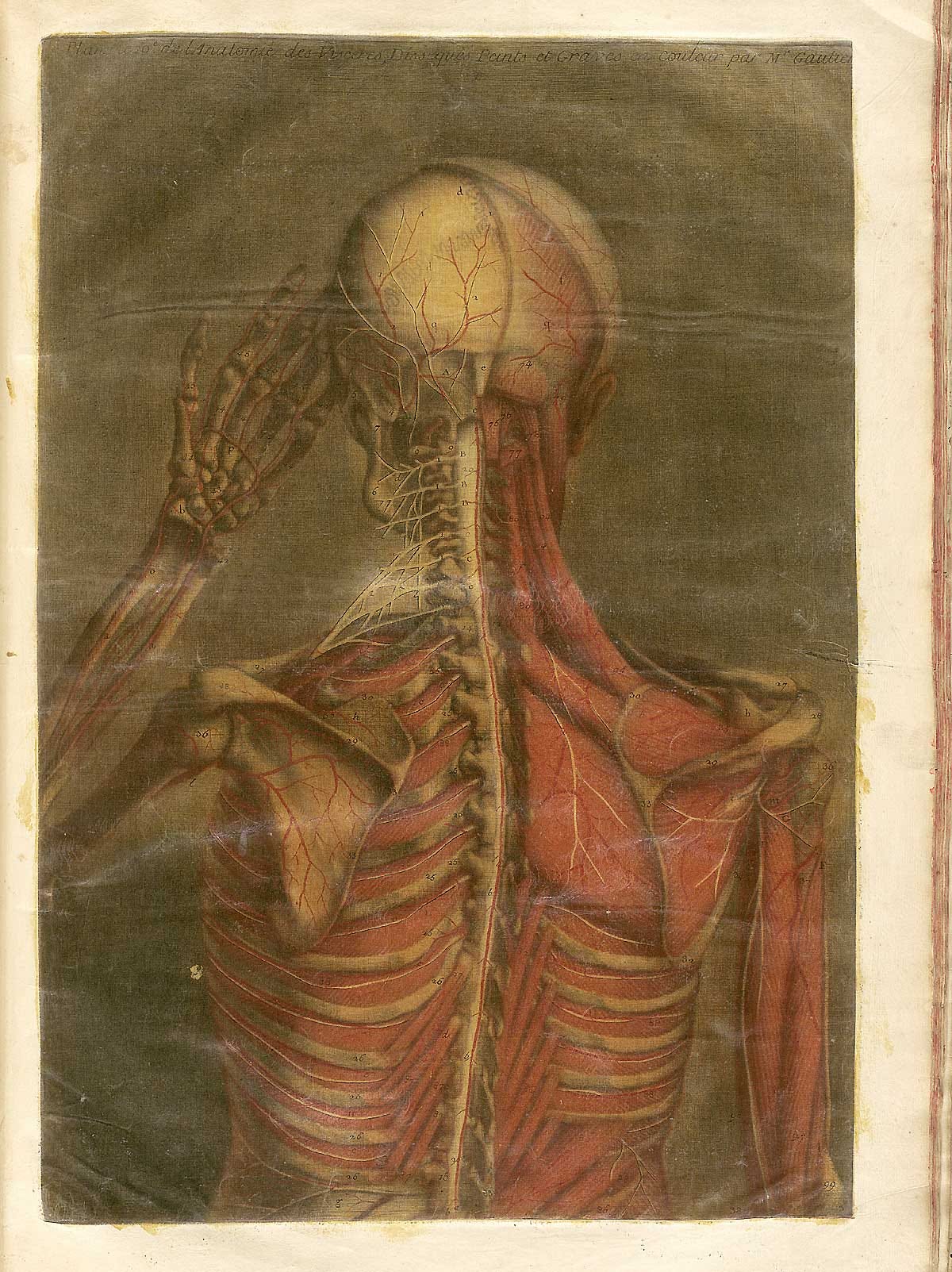
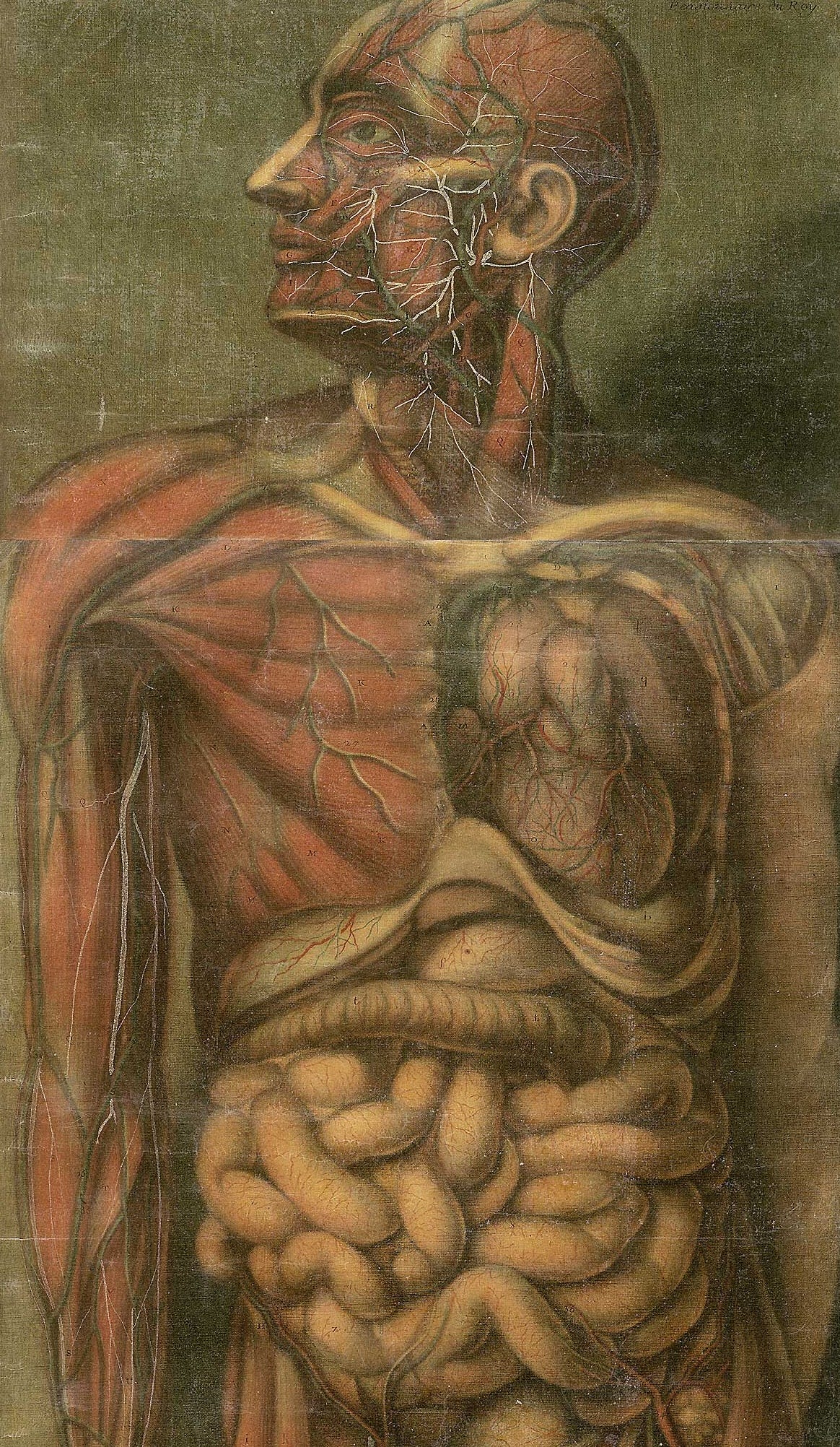
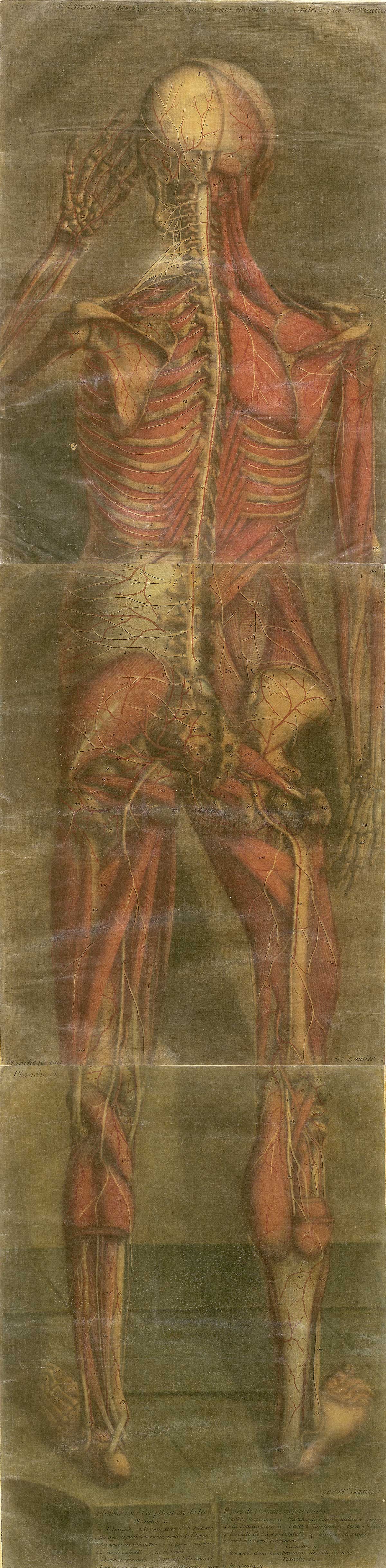
Art by Jacques Fabien Gautier d’Agoty (1711–1786).