

As a little girl, I loved to read articles from The Friend, The Church of Jesus Christ of Latter-day Saints’ magazine written for children. One month, I was drawn to a short piece that highlighted what President Spencer W. Kimball had identified as the most important word in the dictionary: remember.1
I cannot recall all the particulars of that article, but I do recall a feeling of resonance, a feeling that struck a chord deep within me—a feeling that spoke to my mind and my heart. Though I was very young, the importance of remembering just made sense to me. Remembering Christ. Remembering covenants. Remembering others. In my own youthful way, I recognized that remembering was a crucial choice. An important responsibility. An opportunity to show commitment and love. An act of discipleship.
An important seed had indeed been planted when I read that article. In the days, weeks, months, and years that followed, I continued to reflect upon the importance of remembering. Just days after reading it, for example, I taught a family home evening lesson to my parents and siblings on the subject. I wrote about remembering in my diary on more than one occasion, and focused on the subject as a youth speaker in sacrament meeting.
History Major
Years later, as a freshman at Brigham Young University, I found myself drawn to academic life. While immersed in a world of reading, writing, and research, I discovered that multiple subjects appealed to me. At times, I felt overwhelmed because I wanted to major in everything! A budding sense of what direction I should take came when I took American Heritage. Within the context of that course, I encountered my true passion: history.
The formal decision to become a history major followed an experience of personal revelation. One summer morning, a thought penetrated my mind as I was walking across campus: “Go change your major to history right now!” The feeling I had at that moment was so clear and intense that I immediately turned around, made my way to the academic advisement center, and declared history as my major on the spot. The words spoken by a historian at the campus-wide devotional later that morning confirmed my decision. I would engage in the work of remembering.
Graduate School
Several years later, while pursuing a PhD in history at Syracuse University, I immersed myself in the history of American religion and became increasingly fascinated with the rise of revivalism during the Second Great Awakening. Religious experience and conversion became strong areas of emphasis for me. But it was working with an advisor who specialized in women’s religious history that proved most transformative.
I had always felt the absence of women’s voices and stories in scripture and church history, as well as in the world around me. To me, this silence felt deafening, disappointing, and disconcerting. Did women matter, really matter, I wondered? Did God see and value women as much as he saw and valued men? Was I wrong to ache for a more nuanced sense of purpose? A more complex sense of identity?
For years, the answers to those questions did not feel particularly clear. I even wondered if I was wrong for feeling the way I did. Maybe I just didn’t have enough faith?
However, in graduate school, I began to recognize that these questions—questions that had truly pierced my heart and mind, questions that had pained me—mattered. They mattered to a fractured world filled with hurting people. And they mattered to a God who pleads with us to always remember him and to always remember our fellow humans. Including women. Historical absence is not a divine mandate; it is a mortal flaw.
Indeed, the stories that often form our sense of history reflect societal values, perspectives, and understandings of the time and place of those who produced the history. Those stories, in turn, reinforce those values, perspectives, and understandings in the present. As a budding historian, I thus began to consider the impact of forgetting as well as remembering on the historical narrative. I came to recognize that most of human history has been wittingly and unwittingly forgotten, overlooked, ignored, or undervalued. The telling of history has long focused on the victors, the empowered, the wealthy, the famous, and the literate. The “haves” over the “have-nots.” Women, minorities, and the disempowered have rarely received mention. Their absence from written history has falsely fostered the idea that they are inferior and insignificant. This has had a devastating impact on communities, churches, families, and individual souls. It has created rifts of misunderstanding between God and his children. It has curtailed identity formation and undermined the importance of belonging. Forgetting can be so destructive, whereas remembering can be so divine. As Gerda Lerner so wisely observed, not having a history truly matters—because a history is “how we define ourselves and our community [and] how we understand our time and place and the context of our lives.”2
Conversion
As a graduate student, my historical interests increasingly shifted toward the forgotten. Though still intrigued by revivals and conversion during the Second Great Awakening, I found myself far less focused on key male figures like Charles Grandison Finney or James McGready; instead, I was drawn to the women nobody knew about.
Although I was initially concerned that I would discover a dearth of primary source material by or about women, a careful combing through archival material—countless hours spent in various repositories throughout the eastern United States—led to a wealth of information. I discovered journals, diaries, correspondence, scrapbooks, narratives, periodical literature and church records that were overflowing with female voices. Thoughts, feelings, visions, dreams, theological rumination, conversion narratives, the formation of spiritual friendships, prayers, hymns, fears, hopes, and divine encounters emerged from the pages I read. The priorities of generations of historians had left women hidden, but they were not absent! Though recording women’s history often required more creativity, women’s voices were abundantly present in implicit and explicit ways.
When I initially began working on my dissertation, I intended to focus primarily on conversion experiences at revivals. But as I became immersed in women’s spiritual diaries, I found myself reflecting upon Gerda Lerner’s observation that “[There is a] depth and urgency of the search of Jewish and Christian women for connection to the Divine.”3 This spiritual seeking—the depth and urgency Lerner observed—seeped from the pages I read. And it didn’t just emerge at revivals, nor did it end with a conversion experience. It filled pages and pages of diaries; it extended year after year after year. Relationship with the divine was an ever-present theme in the lives of women who discovered that conversion was the slow work of God. They were engaged in a process of recovering their relationships with God—conversion was a work of restoration.4 Restoring the self. Restoring relationship with the divine. Restoring relationships with others. In letters and diaries, I discovered that women were experiencing what it meant to have a relationship with God, what it meant to become converted, what it meant to believe and live religion. Women kept detailed spiritual records and filled the pews; they dominated sacred space. They shaped and were shaped by religion. These were fascinating women like visionary Catherine Livingston Garrettson, who kept a spiritual diary until her mid-nineties, or Emelie Royce Bradley, who longed to evangelize. Or women like Zina Baker Huntington and Nancy Tracy whose deep commitment to revival attendance eventually fostered their conversions to The Church of Jesus Christ of Latter-day Saints. Their individual and collective stories reflected that women’s history is indeed, as Ann Braude so insightfully declared, American religious history.5
My research taught me that those who are the forgotten remember God. And God remembers them. The forgotten deserve to be remembered. The forgotten are central to American religious history. The forgotten are an essential part of my own Church’s history.
As a historian, I committed to myself that I would always remember the forgotten.
And God Remembered Rachel
Years later, as loss and suffering seeped into every crevice of my life, as I encountered the rawness that comes with devastating loss, as feelings of utter vulnerability consumed me, my commitment to remembering took on additional meaning.
In July of 2019, I learned that I needed to have a hysterectomy due to massive fibroids and severe adenomyosis. Given the enlarged state of my uterus, my doctors determined that I needed to have an open abdominal surgery. My surgery proved to be unexpectedly difficult, and in the miserable weeks that followed, multiple problems and complications emerged that did not make sense, resulting in further hospitalization.
It eventually became evident that one of my organs had been mistakenly sutured to some internal tissue. That injury led to the formation of a vesicovaginal fistula. To my horror, I had joined the ranks of approximately two to three million women, primarily in the global south, who suffer from a tragic ailment resulting in continuous and unremitting urinary incontinence, a condition that one writer describes as the leprosy of the twenty-first century.6
To repair my vesicovaginal fistula, I had to have two additional surgeries in October 2019. The pain I experienced during this time is beyond description. I no longer felt like a person; I was merely an actor going through the motions of a tragic role. Tragedy after tragedy. Bad news awaiting around every corner.
By early November, I sensed that I was not recovering well nor was I healing properly. A CT cystogram later that month confirmed my greatest fear: My vesicovaginal fistula was still there. I remained composed—numb—as my surgeon, with tears trickling down his face, informed me that treatment had thus far failed to correct my condition. Several stressful and painful months ensued.
By March 2020, just as the Covid-19 pandemic hit, the need for medical expertise outside of Utah became clear. But determining what to do or how to do it felt beyond impossible. There seemed to be no end to disaster and devastation.
Late one evening, I sobbed as I wondered if I would ever really live again. My dire circumstances seemed beyond hope. I was a leaky mess. Everything was swollen, raw, sore. Pelvic pain felt like it was consuming my entire body. Nerve pain from my recent bout of shingles radiated across my face. The medical world had just shut down, and I didn’t know where to turn for help.
I tossed and turned for hours, eventually drifting into a light sleep. In the early morning hours, I suddenly awoke from a dream, a feeling, a sense of divine presence. The words, “And God remembered Rachel,” echoed over and over again through my mind. “And God remembered Rachel. And God remembered Rachel.”
Tears poured down my face. I recognized those words from the Old Testament. Rachel, in her despair. Rachel, after suffering for so long. Rachel, feeling hopeless and uncertain about what to do. Rachel, just as she was feeling forgotten, utterly and completely forgotten, felt God’s remembrance. She felt it in the form of divine love. Though it came slowly, Rachel received the direction she needed. She was healed, restored, renewed. Physically. Spiritually.
As those thoughts swirled through my mind, I reached for my scriptures. Tears turned into sobs as I read from Genesis 30. “And God remembered Rachel. And God remembered Rachel.”
Forgotten. Remembered. REMEMBERED. The most important word. Christ was with Rachel of old in her woundedness. And Christ was with me—also Rachel—in my woundedness. I had not been forgotten. God remembered Rachel.
Though clarity and direction continued to unfold slowly, though the healing process proved long and difficult and painful, and although complications remain present in my life, the peace that emerged in that moment of remembrance—the reminder that God remembers—remains with me. And it has changed and continues to change me—physically, spiritually, emotionally, mentally, and professionally.
The words I read from The Friend during childhood continue to resonate. The most important word is remember.
Remembering History
Personal suffering has further underscored to me the importance of remembering, especially the women we typically forget. Simply stated, my sense of purpose as a scholar and as a person of faith has changed. I am drawn to work that feels more meaningful, more crucial, more purposeful. My personal context has enriched how I see historical events, the kinds of questions I ask, and how I read and interpret sources. I see things I didn’t see before; I recognize things I once overlooked.
I have, for example, become more adept at reading between the lines—seeing the depth of women’s experiences in margins and footnotes. I also more readily recognize physical and emotional suffering in the sources I read. I am ever aware that illness is a crucial part of historical context, and, as Virginia Woolf argues, a fundamental part of understanding the human experience.7 I am drawn to the ways loss and suffering have impacted individuals, families, and communities, as well as personal relationships with God. And, I have come to believe that the embodied experience—and the suffering that comes with it—is a fundamental part of religious history, and especially Latter-day Saint history. Women’s lives, filled with stories of loss, birth, suffering, death, abuse, illness, healing, and divine presence, provide a window into our lived theology.
For me, being a historian has become a more sacred work—a work of hallowed remembrance, a form of discipleship. An invitation to value humanity in deeper and broader ways—an opportunity to consider whole persons, to see the physical and the spiritual aspects of human lives. A reminder that every story matters, that every human counts. Consequently, the simple has become more sacred. The ordinary feels more profound. And it has become increasingly important to me to see the invisible, to remember the forgotten, to hear through deafening silence, and to speak on behalf of those who lack a voice. Being a historian gives me the opportunity to view people of the past through a lens of love, empathy, and compassion, and a reminder to view people in the present through those same lenses. I now see history as a work of healing, an opportunity to identify past wounds, and the privilege to help overcome the effects of those wounds in the world around us.
Rachel Cope is a professor of Church history and doctrine at Brigham Young University. She received a PhD in American History (with an emphasis in women’s history and religious history) from Syracuse University. Rachel has published numerous articles and edited volumes on women’s religious experiences in early America. Most recently, her book, The Slow Work of God, was published by Deseret Book. She also serves as an associate editor of Wesley and Methodist Studies. As a vesicovaginal fistula survivor, Rachel is also deeply committed to raising awareness of and funding for obstetric fistula victims throughout the Global South.
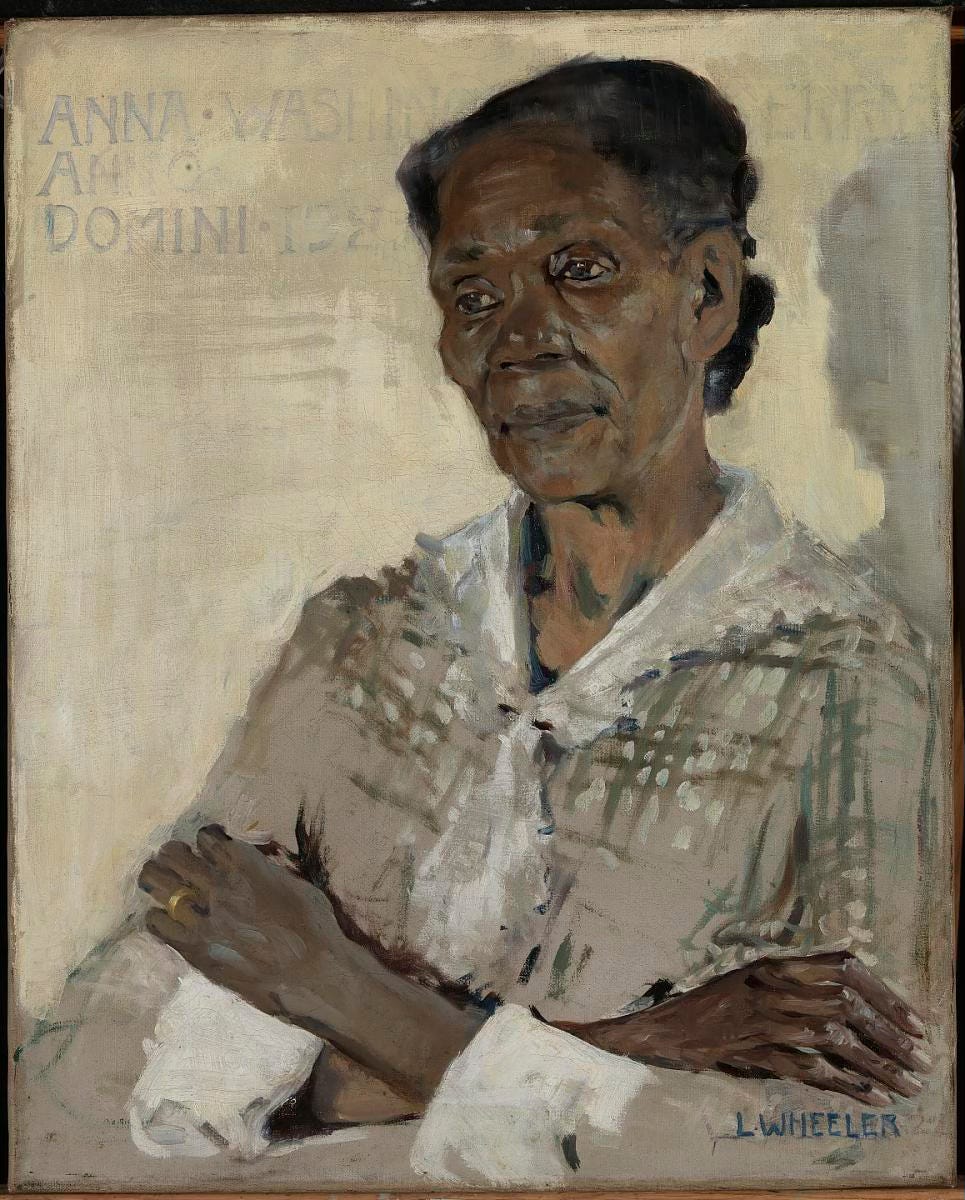
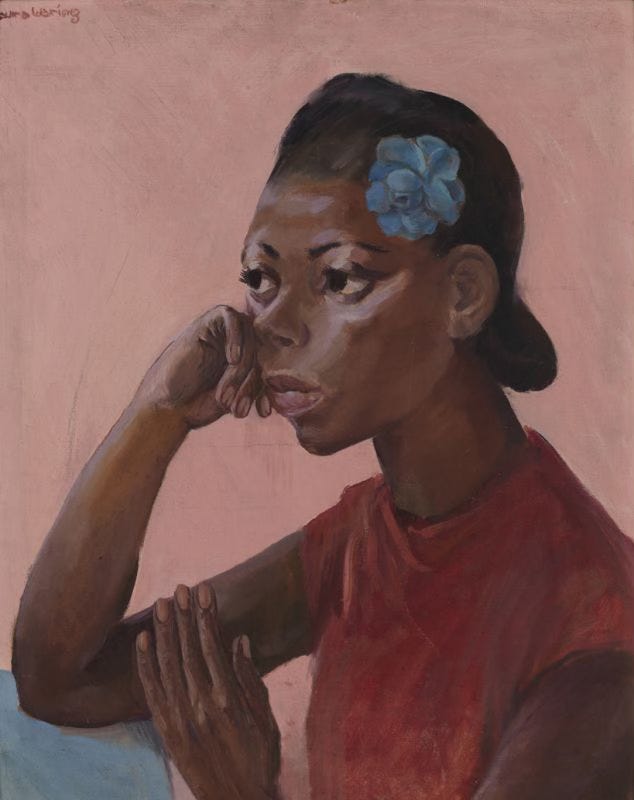
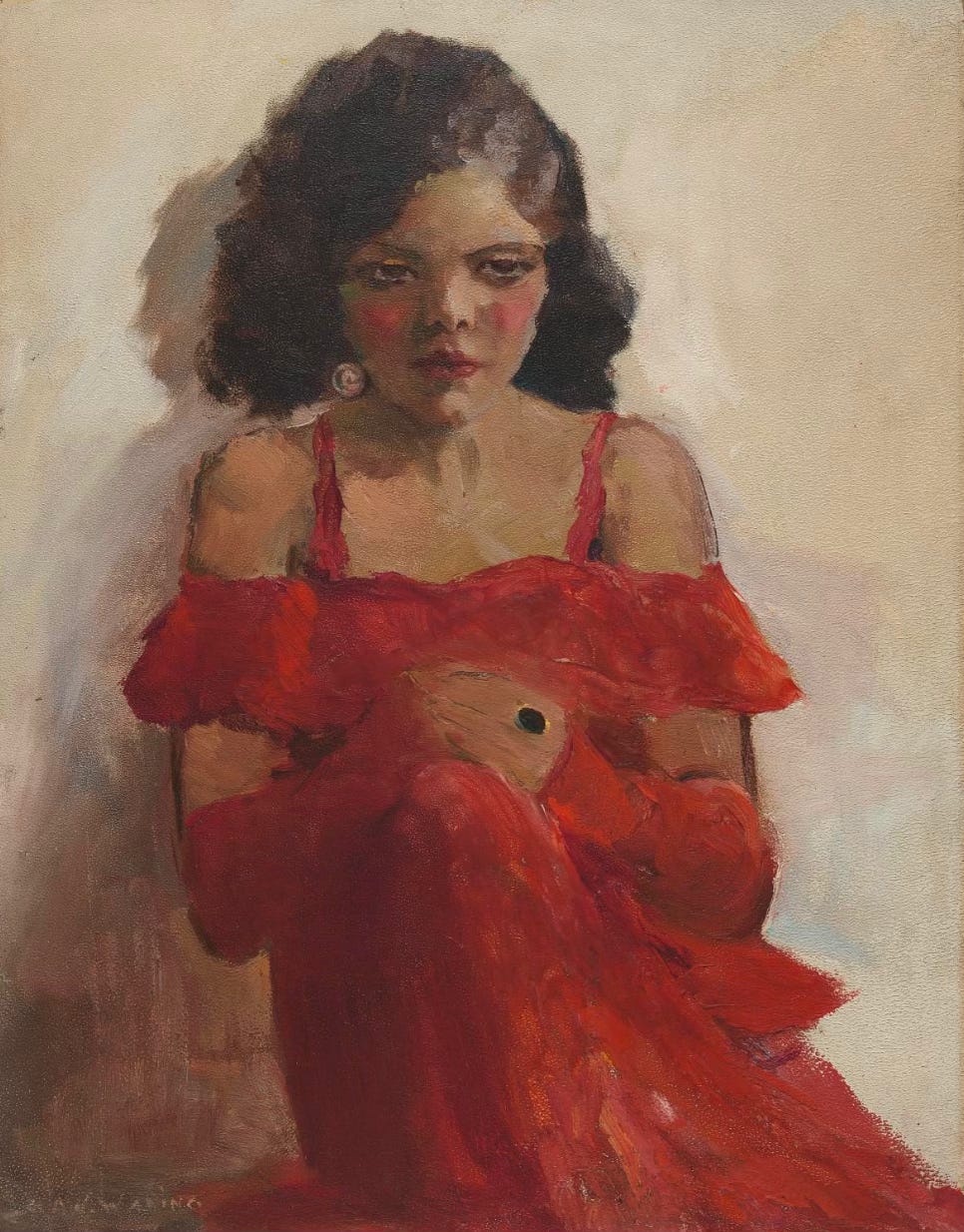
Art by Laura Wheeler Waring (1887–1948).
From Spencer W. Kimball, “Circles of Exaltation,” Address to Religious Educators, 28 June 1968.
Gerda Lerner, Why History Matters: Life and Thought (Oxford University Press, 1997).
Gerda Lerner, The Creation of Feminist Consciousness: From the Middle Ages to Eighteen-seventy (Oxford University Press, 1993) 7.
D. Bruce Hindmarsh, The Evangelical Conversion Narrative: Spiritual Autobiography in Early Modern England (Oxford University Press, 2005).
Ann Braude, “Women’s History Is American Religious History” in Retelling U.S. Religious History, ed. Thomas A. Tweed (University of California Press, 1997) 87–107.
Nicholas Kristof, “The World’s Modern-Day Lepers: Women with Fistulas,” New York Times, March 19, 2016.
Virginia Woolf, On Being Ill (The Hogarth Press, 1930), 11.